
Dallas · Motorcycle Accident
Dallas Motorcycle Accident Lawyer
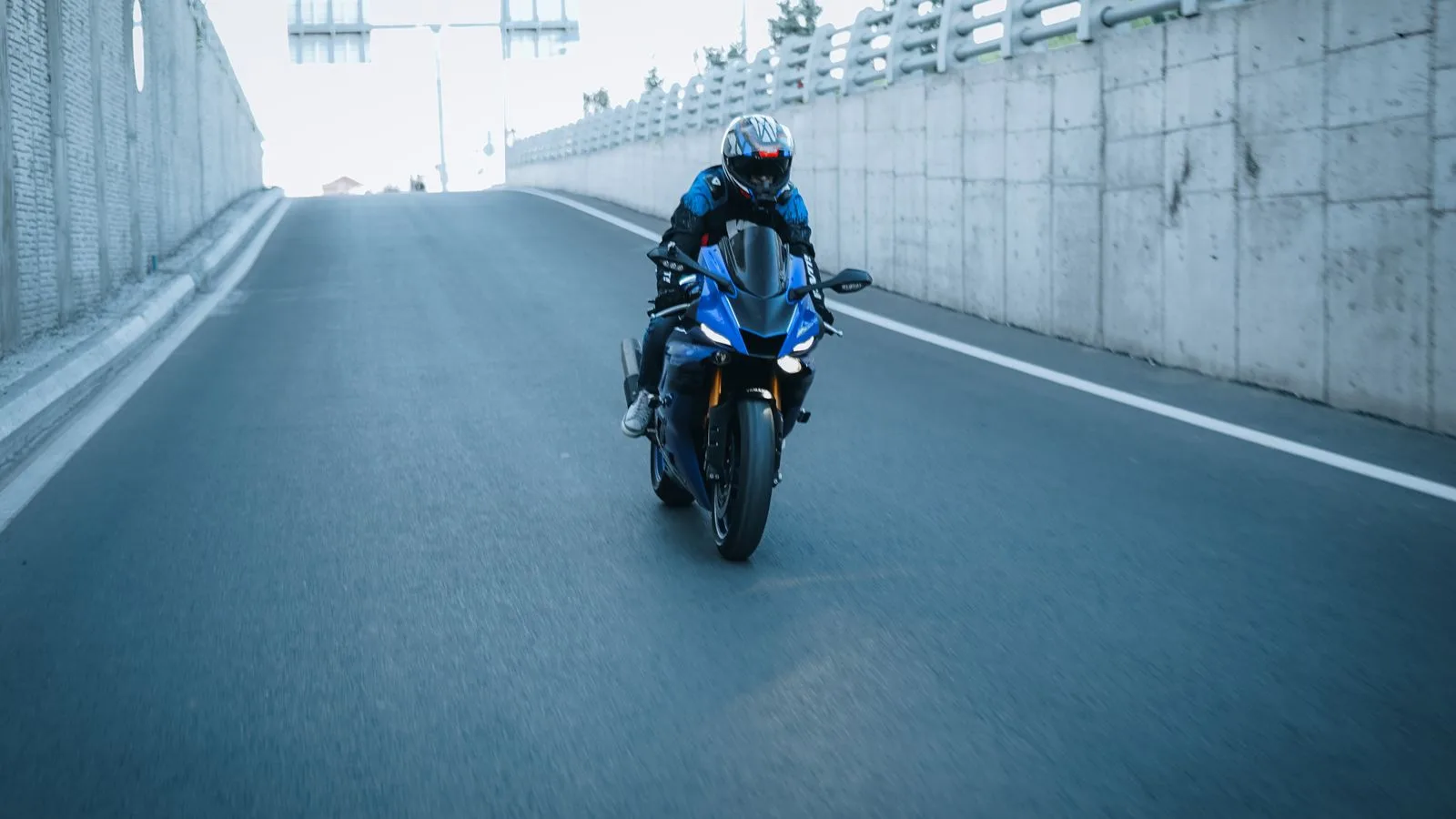
A motorcycle accident claim in Dallas is a fault-based negligence case where a motor vehicle strikes a rider, producing severe injuries because there is no surrounding structure to absorb the impact. Texas does not operate as a no-fault state, so the injured rider must prove the other driver's negligence, typically a left turn across the rider's path or an inattentive lane change. Modified comparative fault under Chapter 33 applies, and insurers aggressively assign blame to riders to push the recovery below the fifty-one-percent bar. Suits proceed in Dallas County district court at the George L. Allen Sr. Courts Building under the two-year limitation of Section 16.003, with corridor-specific evidence from the North Tollway and US-75 Central Expressway often central to the liability proof.
Why Dallas cases are different
Riders crossing Dallas face a faster, denser freeway grid than most of Texas, from the high-velocity North Tollway through Preston and the Galleria to congested Central Expressway choke points where drivers brake hard and scan for exits, not motorcycles. We represent injured riders and their families statewide from our Austin office.
Left-turn and lane-change crashes on Dallas roads
The most common way riders get hurt in Dallas is the same way they get hurt across Texas: a driver fails to see the motorcycle and turns or changes lanes into its path. The risk spikes on the Dallas North Tollway, where higher-velocity sideswipes and lane-change collisions are the signature crash type through the Galleria and Preston corridors, and on US-75 Central Expressway, where sharp deceleration near Mockingbird, Knox-Henderson, and Walnut Hill turns a missed mirror check into a serious impact. Unlike a car occupant, a rider has no crumple zone, so even a low-speed lane-change collision can fracture limbs or cause a head injury. The crash report supplement, physical evidence at the scene, and any DalTrans camera or nearby business surveillance can establish that the driver, not the rider, created the danger, especially in a fast lane-change crash where the sequence is disputed.
Confronting rider bias in fault and damages
Insurers and juries often arrive with an unspoken assumption that a motorcyclist was speeding, lane-splitting, or otherwise reckless, and the defense leans on that bias to shift blame under Texas comparative-fault rules. Because your recovery shrinks with any fault assigned to you and disappears past the fifty-percent line, countering that narrative is central to the case. On high-speed routes like the North Tollway, the defense will press the speed accusation hardest, so we document the rider's lawful lane position, lighting, gear, and speed and pair it with the physical evidence and witness accounts that scatter quickly after a freeway crash. Motorcycle injuries also tend to be severe, road rash, fractures, and traumatic brain injury, which means future-care needs must be valued accurately rather than discounted with the early lowball offer riders frequently receive. Framing the human story alongside the engineering of the crash is how rider bias gets neutralized.

Frequently asked
Dallas motorcycle accident questions
- Defense insurers reflexively blame riders, and the speed accusation lands hardest on fast routes like the North Tollway. We counter with the physical evidence, scene measurements, the crash report supplement, and any DalTrans or business surveillance to show your actual speed and lane position. Because Texas comparative fault reduces or bars recovery based on your share, neutralizing that assumption with real evidence directly protects what you can recover.
- Texas law does not authorize lane-splitting, and a driver may claim you were doing it to shift blame, especially in dense Central Expressway congestion. Even where you were riding lawfully, the accusation gets raised, so documenting your lane position and the driver's left turn or lane change is important. Whether and how this affects your claim depends on the facts the evidence actually supports.
- Early lowball offers are common in motorcycle cases because insurers expect riders to be undervalued and hope to settle before the full injury picture forms. Severe injuries like fractures and brain trauma often require follow-up imaging and longer treatment to assess. We hold off on valuation until future-care needs are clear rather than accepting an offer keyed to an initial ER visit.
- Texas law allows riders twenty-one and older to ride without a helmet if they carry at least ten thousand dollars in medical-payment coverage or completed an approved safety course. A helmet's absence is not automatically admissible to reduce damages for injuries other than head injuries, and even for head injuries the defense must prove causation. We address the helmet issue factually and defensively before it is used to distort your recovery.
- A liability denial is not the end of the case. We build the record independently: crash report supplement, physical scene evidence, DalTrans North Tollway or Central Expressway footage, business camera footage in Knox-Henderson or Deep Ellum corridors if applicable, and eyewitnesses. A driver who states he never saw the motorcycle has made a statement about inattention, not exoneration. We document what the physical evidence shows and let that drive the demand.
- Yes, if you did not reject it in writing. Texas requires insurers to offer uninsured and underinsured motorist coverage, and for a motorcycle crash resulting in serious fractures or brain injury, your own UM/UIM policy can be the primary source of recovery when the at-fault driver carried nothing or not enough. We identify the coverage available under your own policy in the first consultation.
Where we work from
Downtown Austin. Dallas clients welcome.
Our office is in downtown Austin; we represent Dallas-area clients statewide and travel to Dallas for case-specific needs (scene visits, medical-records consultations, court appearances). Home and hospital visits when injuries make travel difficult.
Talk to a Dallas motorcycle accident lawyer.
Free case review, no obligation. We'll tell you straight whether we can help.