
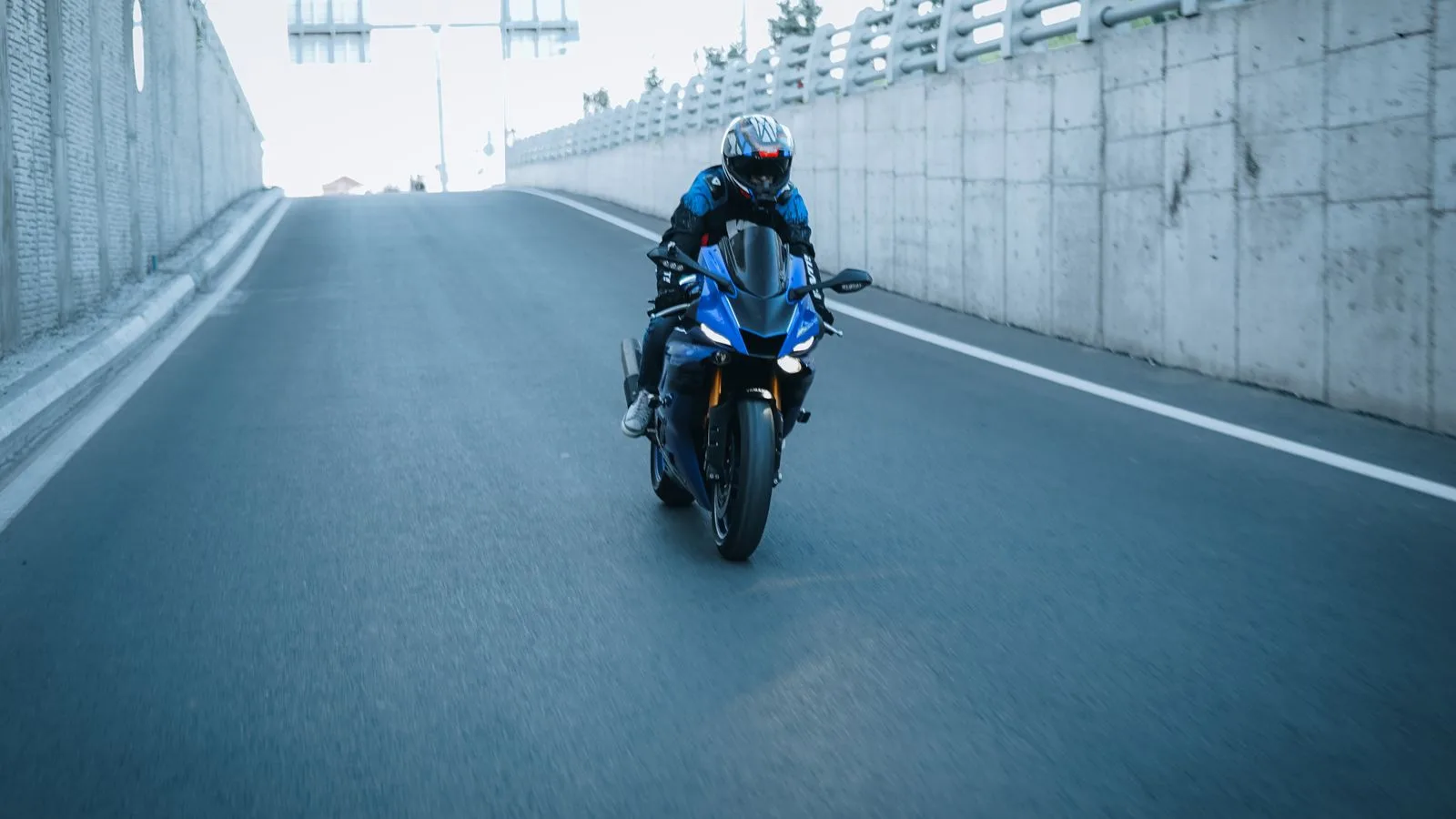
League City · Motorcycle Accident
League City Motorcycle Accident Lawyer
A motorcycle accident claim in League City follows the same Texas fault-based negligence framework as any other vehicle crash, but the injured party faces additional hurdles: drivers frequently claim they never saw the rider, juries sometimes assign unwarranted blame, and the injuries tend to be severe because the rider has no enclosure to absorb impact. The recurring crash pattern here is a left-turning driver cutting across a rider's path at intersections on FM-518 or NASA Parkway (FM-2094), often during the heavy NASA-campus commute flow. The two-year filing deadline of Tex. Civ. Prac. & Rem. Code § 16.003 applies, and Galveston County district court hears the suit.
Why League City cases are different
Riders on FM-518, SH-3, and NASA Parkway face the same hazard everywhere in Texas: drivers who look without seeing them. Add the Kemah-Seabrook waterfront weekend traffic and the I-45 commuter crush, and League City's roads put motorcyclists in front of inattentive turning and lane-changing vehicles.
Left-turn and lane-change crashes on League City arterials
The classic motorcycle collision is the left-turn crash: a car turning across a rider's path at an intersection because the driver never registered the smaller, narrower profile of an approaching bike. On FM-518 through the center of League City, with its recurring intersection conflicts at SH-3, Calder Drive, and Walker Street, and on NASA Parkway feeding the Johnson Space Center commute, those turning and lane-change conflicts are exactly where riders get hit. The legal fault usually sits with the driver who failed to yield, but proving it means countering the reflexive assumption that the rider was speeding or weaving. We reconstruct the geometry from signal-timing logs, skid and gouge evidence, helmet and gear condition, and any available camera footage along the corridor. Establishing the driver's failure to yield and the rider's lawful position in the lane is the core of the case, and it is the part insurers most often try to muddy with rider-blame narratives.
Rider bias, severe injuries, and the road hazards along the corridor
Motorcyclists carry an unfair reputation into every claim, and adjusters and juries alike sometimes start from the assumption that a rider was reckless. That bias is more than an inconvenience when injuries are severe: with no enclosure or crumple zone, a League City rider hit at an FM-2094 interchange or on the I-45 frontage roads often suffers fractures, road rash requiring grafts, or a traumatic brain injury even with a helmet. Because Texas uses Chapter 33 proportionate responsibility, any percentage of fault wrongly pinned on the rider directly reduces the recovery, and crossing 50 percent bars it entirely. Countering rider bias takes affirmative evidence: documented road hazards along the route, helmet and protective-gear use, the physics of the impact, and a clean reconstruction of right-of-way. We also build the medical chronology carefully, because the orthopedic, neurology, and physical-medicine follow-up after the initial ER visit is usually where the true extent of a rider's injuries is finally documented.
More in League City
Other ways we help League City injury victims.


Frequently asked
League City motorcycle accident questions
- They can argue it, but you can rebut it with evidence. Texas applies proportionate responsibility, so any fault assigned to you reduces your recovery and a share above 50 percent bars it. Rider-blame is often a reflex, not a finding. Reconstruction of right-of-way, signal-timing data, skid evidence, and gear condition can show the driver failed to yield. We build that affirmative record rather than letting the assumption stand.
- It can become an argument, but it does not automatically defeat a claim. Texas helmet law has exceptions for certain riders, and the central question remains who caused the crash. A defense may try to tie helmet status to head-injury damages. We address it head-on with medical evidence about whether a helmet would have changed the specific injuries, and we keep the focus on the driver's failure to yield, which is the actual cause.
- Because a rider has no enclosure, impacts on the I-45 frontage roads or at the FM-2094 interchange tend to produce fractures, road rash needing skin grafts, and traumatic brain injuries even when a helmet is worn. These injuries often outrun the first ER visit's documentation, so the orthopedic, neurology, and physical-medicine follow-up in the weeks after the crash is usually where the full picture, and the full value, becomes clear.
- 'I never saw the motorcycle' is not a defense; it is an admission that the driver failed to look carefully enough before turning or changing lanes. On FM-518 and NASA Parkway, where the commuter and waterfront traffic mix means motorcycles share the road regularly, a driver who failed to check has not exercised reasonable care. We use that statement as evidence of inattention rather than letting it function as an excuse.
- Your own uninsured and underinsured motorist coverage on your motorcycle policy can fill the gap when the at-fault driver's limits are too low to cover your injuries. Texas requires insurers to offer UM/UIM coverage, and a written rejection is needed to waive it. We review every policy you carry at intake, and we sequence the third-party and UM/UIM claims carefully so an early low settlement with the at-fault insurer does not accidentally forfeit your UIM rights.
- In Galveston County district court, at either the historic Galveston Island courthouse or the League City Annex at 174 Calder Drive, depending on the court's scheduling. Venue is proper where the crash occurred. The Galveston County jury pool — drawing from island residents, NASA professionals, and the Kemah-Seabrook waterfront community — is a different audience than a Harris County jury, which affects how the rider-bias issue is framed and addressed.
Where we work from
Downtown Austin. League City clients welcome.
Our office is in downtown Austin; we represent League City-area clients statewide and travel to League City for case-specific needs (scene visits, medical-records consultations, court appearances). Home and hospital visits when injuries make travel difficult.
Talk to a League City motorcycle accident lawyer.
Free case review, no obligation. We'll tell you straight whether we can help.