
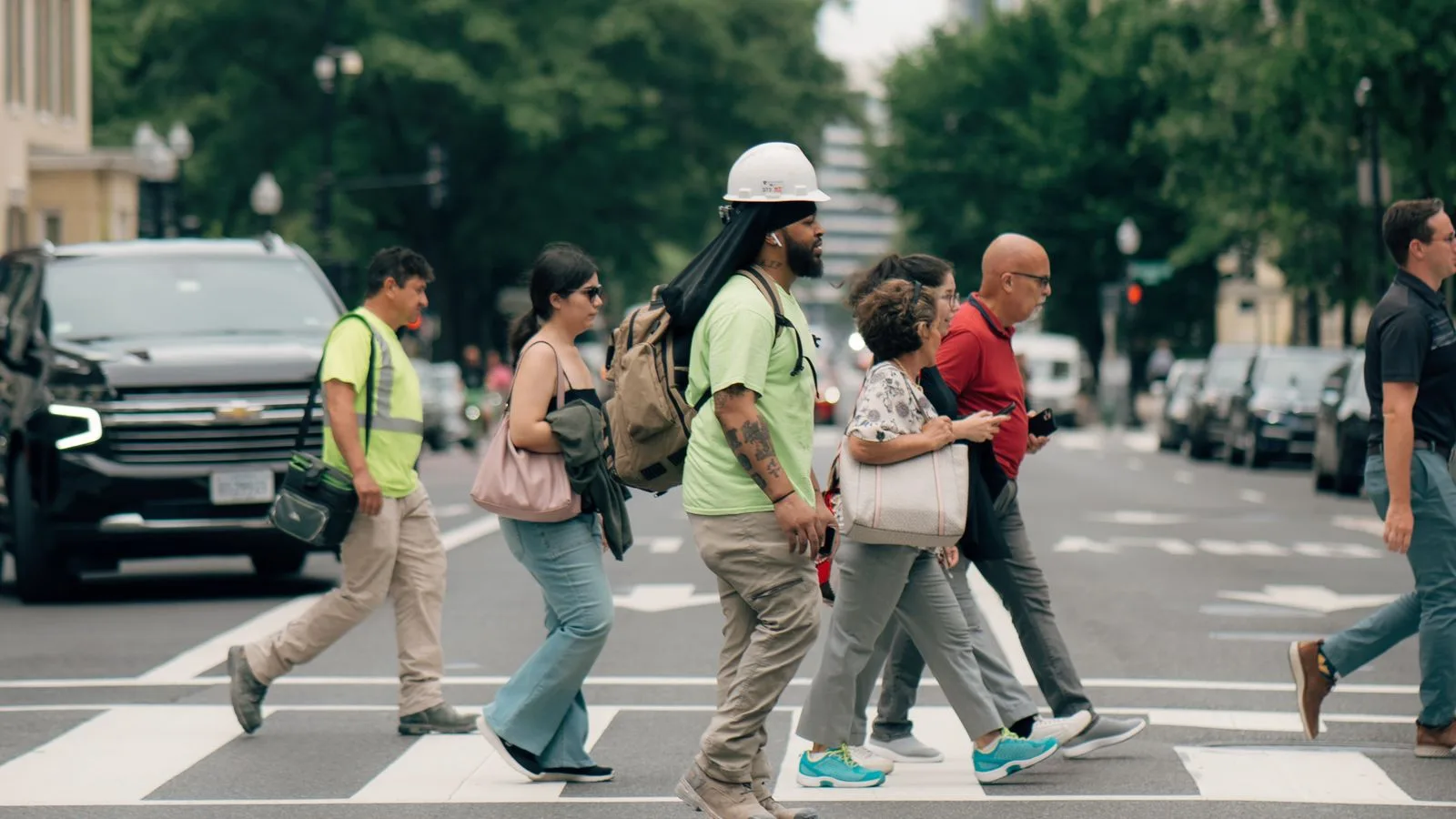
McKinney · Pedestrian Accident
McKinney Pedestrian Accident Lawyer
A pedestrian or bicycle accident claim in McKinney arises when a motor vehicle strikes a person on foot or on a bike, typically at a crosswalk on Louisiana Street or Tennessee Street in the historic downtown, or at a signal-controlled intersection on US-380. Texas law gives pedestrians the right of way in marked crosswalks and treats a bicyclist as having the rights and duties of a motor-vehicle operator, so a driver who fails to yield or who turns across a cyclist's path is liable for the resulting injuries. Modified comparative fault under Tex. Civ. Prac. & Rem. Code § 33.001 still applies, but the physical reality — a person on foot has no protection against a vehicle — makes these injuries severe and the damages significant. Suits against Collin County defendants are filed at the Russell A. Steindam Courts Building in McKinney.
Why McKinney cases are different
Pedestrian and cyclist injuries in McKinney split along the city's two personalities: weekend foot traffic around the historic downtown square and the courthouse, and high-speed intersection conflicts out on the growing US-380 ring. Both turn on right-of-way and driver inattention, but the evidence that proves them differs.
Downtown square crossings and short surveillance windows
Historic downtown McKinney, around the courthouse square and along Louisiana Street, Tennessee Street, and Virginia Street, draws a steady stream of pedestrian and rideshare-involved incidents on weekend evenings, especially during seasonal events. A pedestrian with the right of way in a crosswalk who is struck by an inattentive or turning driver has a strong Texas claim, but downtown cases live or die on evidence that disappears fast. Private surveillance from businesses on the square and city-operated cameras, combined with witness identification in the McKinney Police report, are what establish that the walker was lawfully in the crossing. Surveillance footage is denser downtown than in the residential edges, but retention windows are short, typically 14 to 30 days. The work that protects value is the preservation letter sent in week one and witness interviews captured before memories fade, because once the footage cycles out it is gone.
High-speed corridor strikes and severe injuries
Out on US-380 and the eastern growth ring, the pattern is different and the consequences are worse. Higher posted speeds, signal timing struggling to keep pace with traffic, and a larger share of new-driver and out-of-area-driver crashes combine to produce severe pedestrian and cyclist impacts. A person on foot or a bicycle absorbs the full energy of a collision, so these cases routinely involve fractures, internal injuries, and traumatic brain injury, and major-trauma victims are typically routed by EMS to Medical City Plano, the regional Level I trauma center, or to Parkland Memorial in Dallas. Liability still centers on right-of-way and driver attention, but the proof shifts toward TxDOT and corridor camera footage, vehicle event-data-recorder downloads, and reconstruction rather than the dense business surveillance available downtown. The complete medical chronology, not the ER summary, is what supports the demand.
More in McKinney
Other ways we help McKinney injury victims.


Frequently asked
McKinney pedestrian accident questions
- Quickly. Private surveillance from businesses around the square and city cameras typically hold footage only 14 to 30 days before it overwrites. A preservation letter in the first week and prompt witness interviews are what keep the proof that you were lawfully in the crosswalk. Waiting often means the footage that decides the case is already gone.
- Possibly. Texas uses comparative fault, so even if some responsibility is assigned to you, you can recover as long as your share is not more than 50 percent, with the award reduced by your percentage. Footage, witness statements, and the police report establishing you had the right of way in a crosswalk are what keep that percentage where the facts put it.
- Severe pedestrian and cyclist trauma is typically routed by EMS to Medical City Plano, the regional Level I trauma center, or to Parkland Memorial in Dallas, with less acute cases at Medical City McKinney or Baylor Scott and White McKinney. We gather the complete chart across systems, because follow-up imaging and specialist notes routinely show injuries the initial ER visit did not capture.
- The driver is primarily liable for their negligent failure to yield. Rideshare company liability depends on the driver's status at the time of the crash — actively carrying a passenger or on an accepted trip versus merely logged in — and the applicable insurance tier. We request the rideshare company's trip-record and GPS data early, before that evidence is no longer available, to establish the driver's exact status and the applicable coverage layer.
- Yes. Opening a car door into the path of a cyclist is negligent under Texas law, and the driver or passenger who opened the door is responsible for the resulting injuries. The bicycle-as-vehicle rule means you had the same right to the road as any driver. Document the scene, identify witnesses, and seek medical evaluation immediately, because soft-tissue, wrist, and clavicle injuries from a dooring often appear fully only days after the impact.
- Two years from the date of injury under Tex. Civ. Prac. & Rem. Code § 16.003. If a City of McKinney vehicle or a poorly maintained city signal contributed to the crash, the Texas Tort Claims Act shortens the notice window to six months. Acting long before the two-year deadline is essential because surveillance footage, eyewitness memories, and rideshare GPS records disappear far sooner.
Where we work from
Downtown Austin. McKinney clients welcome.
Our office is in downtown Austin; we represent McKinney-area clients statewide and travel to McKinney for case-specific needs (scene visits, medical-records consultations, court appearances). Home and hospital visits when injuries make travel difficult.
Talk to a McKinney pedestrian accident lawyer.
Free case review, no obligation. We'll tell you straight whether we can help.