
Slip & fall · Subcategory
Slip & Fall Lawyer in Texas
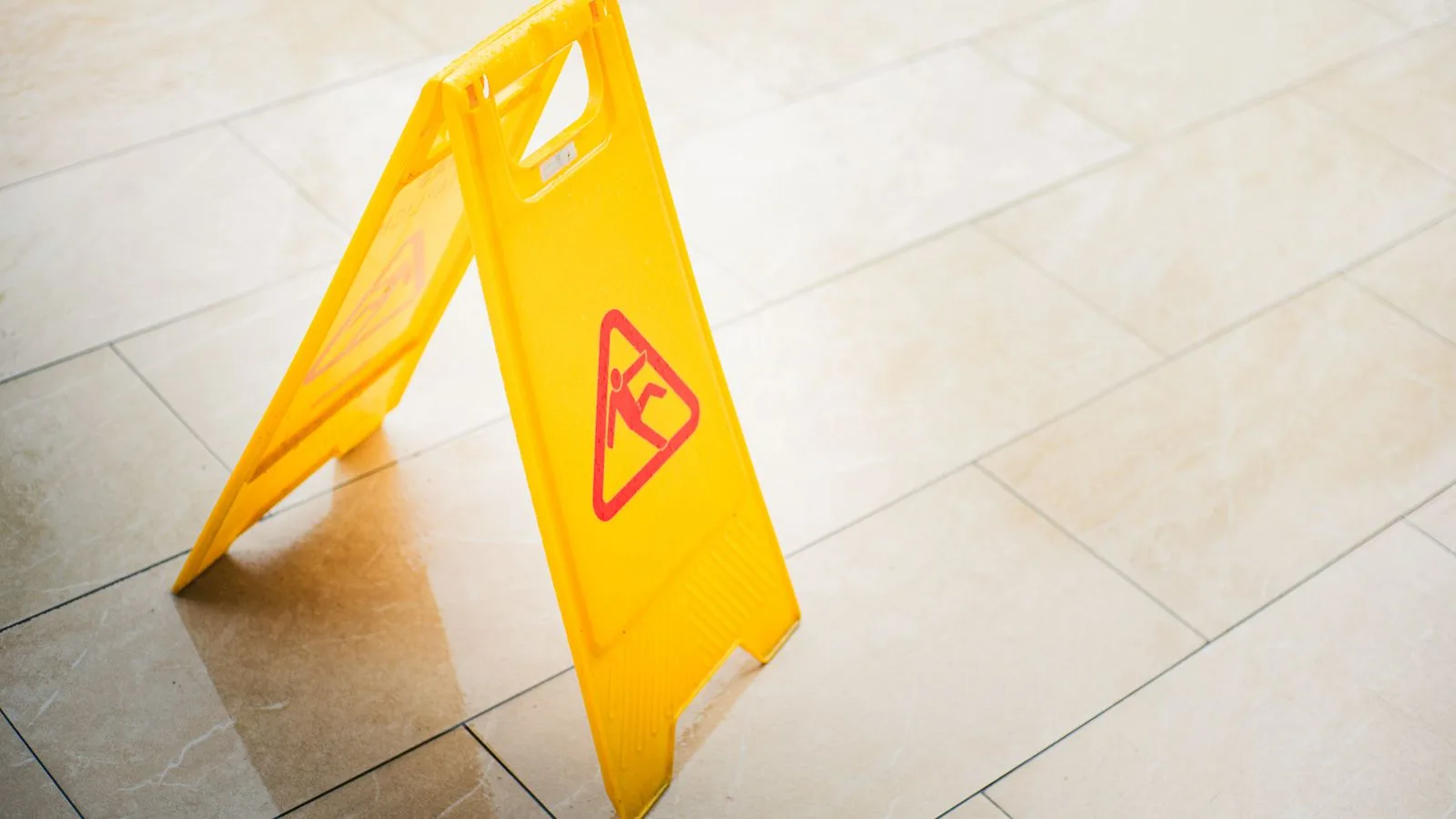
A Texas slip-and-fall case is a premises-liability claim built on the duty a property owner owed to the person who fell, and on proof that the owner knew, or should have known, about the hazard. The visitor's legal status (invitee, licensee, trespasser) sets the duty, and the notice element decides most cases at summary judgment. Falls are common; winnable falls have a documented condition, a documented owner who should have known about it, and a documented injury that ties cleanly to the impact.
Status drives duty: invitee, licensee, trespasser
Texas sorts every visitor into one of three categories and the duty owed scales with the label. A customer walking into a store is an invitee, on the premises for the mutual benefit of both parties, and is owed the highest duty: a premises kept reasonably safe with active inspection for hazards. A social guest at a private home is a licensee, owed a duty to be warned of known dangers but nothing close to the inspection standard. A trespasser is owed only the duty not to be intentionally or grossly negligently harmed. The first task on any fall file is locking down the status, and pushing back when defense counsel tries to relabel an invitee as a licensee to lower the bar.
Notice, actual or constructive, is usually the whole case
An invitee plaintiff has to prove the property owner knew the hazard existed or that it had been there long enough that a reasonable inspection would have caught it. That is the rule from Wal-Mart Stores v. Reece and CMH Homes v. Daenen, and it is where most weak fall cases die. The proof is documentary: timestamped surveillance footage showing how long a spill sat unaddressed, sweep logs with gaps, maintenance work orders, prior-incident reports for the same hazard. Without one of those, the claim is a swearing match between the customer and the store, and the store wins those.
The 'open and obvious' defense and why it is overplayed
Defense counsel raises 'open and obvious' on nearly every store fall: the customer should have seen the hazard, so the owner had no duty. Texas Supreme Court decisions in Austin v. Kroger and Henkel v. Norman narrowed that doctrine considerably; even a visible hazard can support liability when lighting, displays, signage, or the layout of the space made the danger hard to appreciate in real time. We treat the open-and-obvious argument as an evidence problem: photographs of the actual scene, expert testimony on lighting and floor materials when needed, and the client's honest account of what was visible from where she was standing.
Comparative fault and the 51% bar
Texas follows modified comparative fault with a 51% bar (Tex. Civ. Prac. & Rem. Code § 33.001). If a jury finds the fallen invitee 51% or more responsible — for example, for ignoring an adequate warning sign or for walking through an area clearly cordoned off — the recovery is zero. Below 51%, the recovery is reduced by the assigned percentage. Insurers price every offer against this rule, which is why proving the hazard's existence is only half the file; controlling the comparative-fault narrative with photographs, witness statements, and a careful client account is the other half.



Frequently asked
Questions Texas accident victims ask us
- If you were an invitee, a customer or business visitor, you have to prove the property owner had a duty to keep the place reasonably safe, that there was a dangerous condition, that the owner knew or should have known about it, that the owner failed to make it safe or warn you, and that the condition caused your injury. The notice element (knew or should have known) is where most cases turn. Proof of notice usually requires surveillance footage, sweep logs, or prior-incident reports — documents that need to be preserved quickly before they are overwritten or lost.
- It changes the duty the owner owed you. Invitees — paying customers, business visitors, people on the property for mutual economic benefit — are owed an active duty to inspect for hazards and to warn of or correct them. Licensees — social guests and others on the property with permission but not for business purposes — are owed only a duty to be warned of known dangers and not to be injured by willful, wanton, or grossly negligent conduct. Defense counsel often tries to recharacterize an invitee as a licensee because the lower duty is much easier to defend against.
- An owner can argue that the hazard was so plainly visible that a reasonable person would have noticed and avoided it. Texas courts have narrowed the doctrine. Austin v. Kroger and Henkel v. Norman both recognize that even visible hazards can support liability when distractions, lighting, or the layout of the premises made the danger hard to appreciate in the moment. It is rarely the clean defense the insurer pretends. The analysis turns on the specific facts: where the hazard was, how the customer was approaching it, what else was demanding attention.
- Two years from the date of the fall under Tex. Civ. Prac. & Rem. Code § 16.003. Practical deadlines hit much sooner: surveillance footage typically overwrites in 30 days, store-incident reports become harder to obtain as employees turn over, and witnesses move on. Cases against a governmental entity carry a six-month notice requirement under the Texas Tort Claims Act, which runs separately from the two-year statute and is non-negotiable.
- Yes, as long as your percentage of fault is 50% or less. Texas uses modified comparative fault with a 51% bar: at 51% or more, the recovery is zero. At 30%, your damages award is reduced by 30%. Insurers price every offer with the comparative-fault number in mind, which is one reason we work hard early on to control how the fall narrative gets told: not by giving recorded statements, by preserving photographs and the scene, and by being precise about what the client was doing in the moment.
- Not on its own. The legal standard is what the owner knew or, with ordinary care, should have known. A spill that sat for forty minutes while three employees walked past is constructive notice even if no one in management was 'aware' of it. The proof comes from surveillance footage, sweep logs, prior-incident reports for the same condition, and employee depositions. The owner's after-the-fact denial is one piece of evidence among many, not the verdict.
- Hip and acetabular fractures (especially in older adults), wrist fractures from breaking the fall, torn meniscus and ACL injuries from the twist, rotator-cuff and labral tears in the shoulder, lumbar disc injuries, and concussions when the head strikes a hard surface. Older clients sometimes sustain injuries that cause permanent functional decline; the future-care projection in those files (home modifications, assisted living, ongoing therapy) often drives the bulk of the demand.
- No, not before talking to a lawyer. Adjusters use early recorded statements to lock in details that may not be fully accurate yet, particularly about how the fall happened, what you saw beforehand, and how you were feeling. Soft-tissue and orthopedic injuries often take days to fully present, and an early statement that you 'felt fine' can be quoted back at you months later. The proper sequence is medical evaluation first, lawyer second, and any statement to the carrier only after both.
Let's talk about your case.
Free case review, no obligation. We'll tell you straight whether we can help.