
The Colony · Pedestrian Accident
The Colony Pedestrian Accident Lawyer
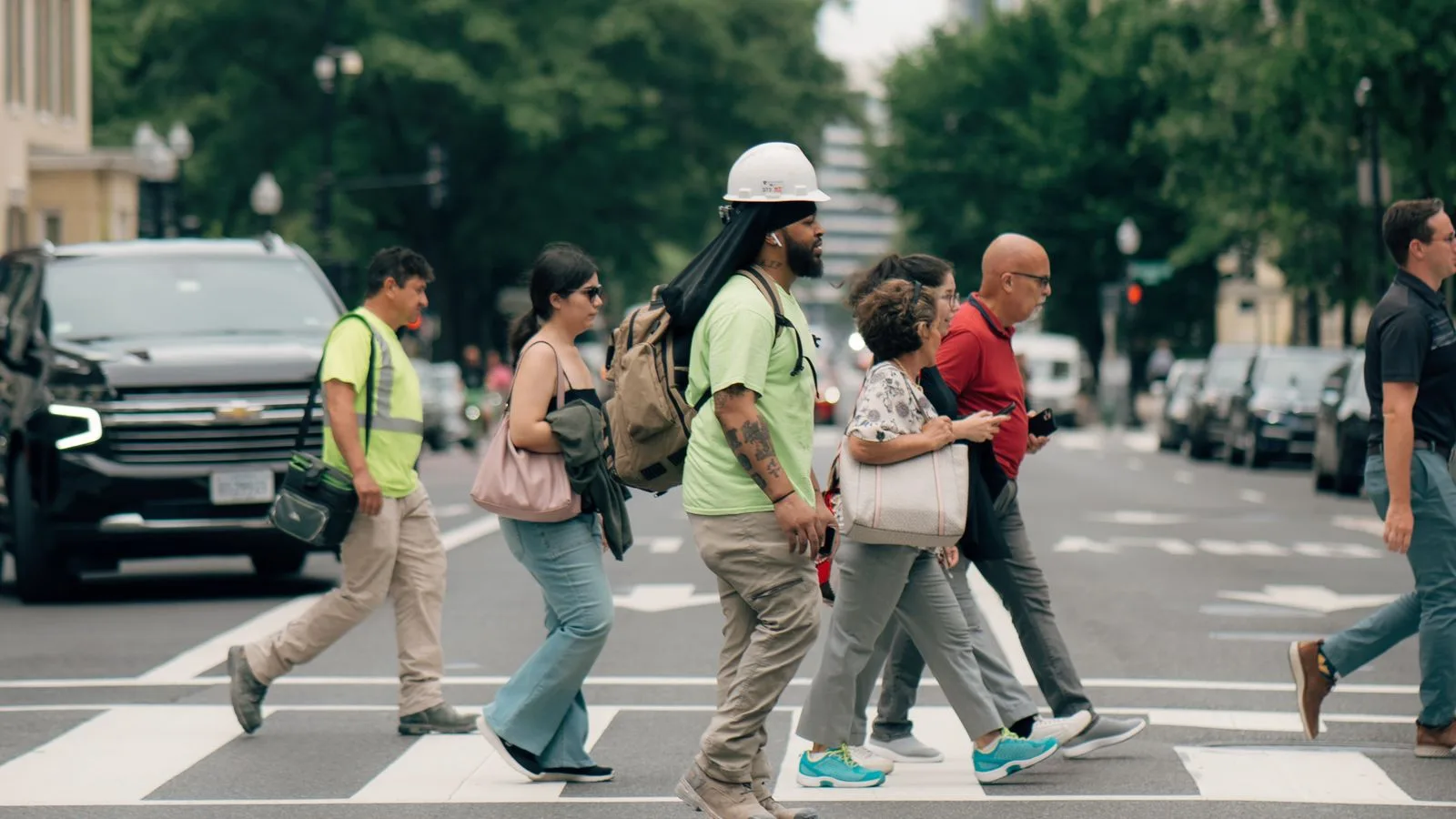
A pedestrian or bicycle accident claim in The Colony arises when a motor vehicle strikes a person on foot or on a bicycle on a Denton County road, street, or crosswalk. Texas law treats cyclists as full vehicle-equivalent road users and requires drivers to yield to pedestrians in marked crosswalks, so the legal framework for these cases under Tex. Transp. Code Ch. 552 and § 551.101 is well established. Injuries are severe because nothing absorbs the collision energy, and Texas's two-year statute under § 16.003 applies, though evidence at high-foot-traffic locations like FM-423 and the Grandscape corridor disappears far faster than that.
Why The Colony cases are different
Pedestrians and cyclists in The Colony are most exposed at the FM-423 / Main Street signals and around Grandscape, where weekend retail and dining surges flood crosswalks and parking-lot crossings with distracted drivers. With no vehicle around them, even a low-speed strike produces serious injury.
Crosswalk right-of-way and driver inattention near Grandscape
Texas law gives a pedestrian crossing in a marked crosswalk or at an intersection the right-of-way, and drivers must yield, but the practical reality on The Colony's corridor is driver inattention: turning into a crosswalk while watching for a gap in traffic, or rolling through a Grandscape parking-lot crossing while scanning for a space. The signalized FM-423 intersections at Lebanon Road and Paige Road, where left-turn collisions already cluster, are the same nodes where a turning driver clips a pedestrian who had the walk signal. We establish right-of-way with signal-phase timing and pedestrian-walk-cycle data, then layer in Grandscape's dense exterior camera coverage. Because that footage overwrites on a short window, a preservation letter in the first week is decisive; without it, a clear right-of-way case can collapse into a swearing match the driver wins.
Severe injuries, comparative fault, and the 'darting' defense
A pedestrian or cyclist absorbs the full energy of a collision, so even a 20-to-30-mph strike produces fractures, internal injuries, and traumatic brain injury — the kind of file routed to Medical City Plano or, for the worst cases, Baylor in downtown Dallas. The standard defense is comparative fault under Chapter 33: the driver's insurer argues the pedestrian darted out, crossed against the signal, or wore dark clothing, trying to push fault past the 51% bar that would zero out recovery. Cyclists face the parallel claim that they ran a stop or rode outside a lane. We rebut it with the physical evidence — point of impact, throw distance, vehicle damage, and camera footage — and the medical record, documenting the full injury trajectory rather than accepting an ER discharge that misses a concussion surfacing days later.
More in The Colony
Other ways we help The Colony injury victims.




Frequently asked
The Colony pedestrian accident questions
- Right-of-way evidence and video. If you were in a marked crosswalk or crossing with a walk signal, Texas law required the driver to yield. We establish that with signal-phase timing and pedestrian-cycle data, then pull Grandscape's exterior camera footage showing the crossing. That footage overwrites quickly, so the preservation letter has to go out in the first week to lock in the proof before it is gone.
- Often yes. The 'darting' defense is the standard attempt to push your fault over the 51% bar and eliminate recovery. We counter it with physical evidence — point of impact, throw distance, and vehicle damage — plus any camera footage. Even if you share some fault under 50%, your recovery is reduced proportionally rather than barred entirely.
- Medical City Lewisville handles most moderate-acuity injuries from The Colony, with overflow to Texas Health Presbyterian Flower Mound or Medical City Plano. Serious trauma is commonly routed to Medical City Plano or to Baylor University Medical Center in downtown Dallas for the worst cases. We are familiar with how these systems document injuries and where their discharge summaries tend to fall short.
- Yes, under Tex. Transp. Code § 551.101, a person operating a bicycle has the same rights and duties as the operator of a motor vehicle. That means a cyclist riding on FM-423 has full lane rights and right-of-way protections. It also means comparative-fault arguments about lane position or signal compliance can be raised, which is why we document the cyclist's actual position and conduct at the scene.
- A driver acting in the course of their employment at the time of the crash can extend liability to their employer. A delivery company, a Grandscape tenant operating a courtesy vehicle, or any business whose employee caused the crash may be liable under respondeat superior. We identify employer relationships at intake because a commercial defendant typically carries higher policy limits than a personal-auto policy.
- Two years from the date of the collision under Tex. Civ. Prac. & Rem. Code § 16.003. If the driver was operating a government vehicle — a city truck, a school-district van — the Texas Tort Claims Act requires written notice of the claim within six months. Grandscape camera footage and signal-cycle data need to be preserved within days, regardless of which deadline applies to the underlying claim.
Where we work from
Downtown Austin. The Colony clients welcome.
Our office is in downtown Austin; we represent The Colony-area clients statewide and travel to The Colony for case-specific needs (scene visits, medical-records consultations, court appearances). Home and hospital visits when injuries make travel difficult.
Talk to a The Colony pedestrian accident lawyer.
Free case review, no obligation. We'll tell you straight whether we can help.