
The Woodlands · Pedestrian Accident
The Woodlands Pedestrian Accident Lawyer
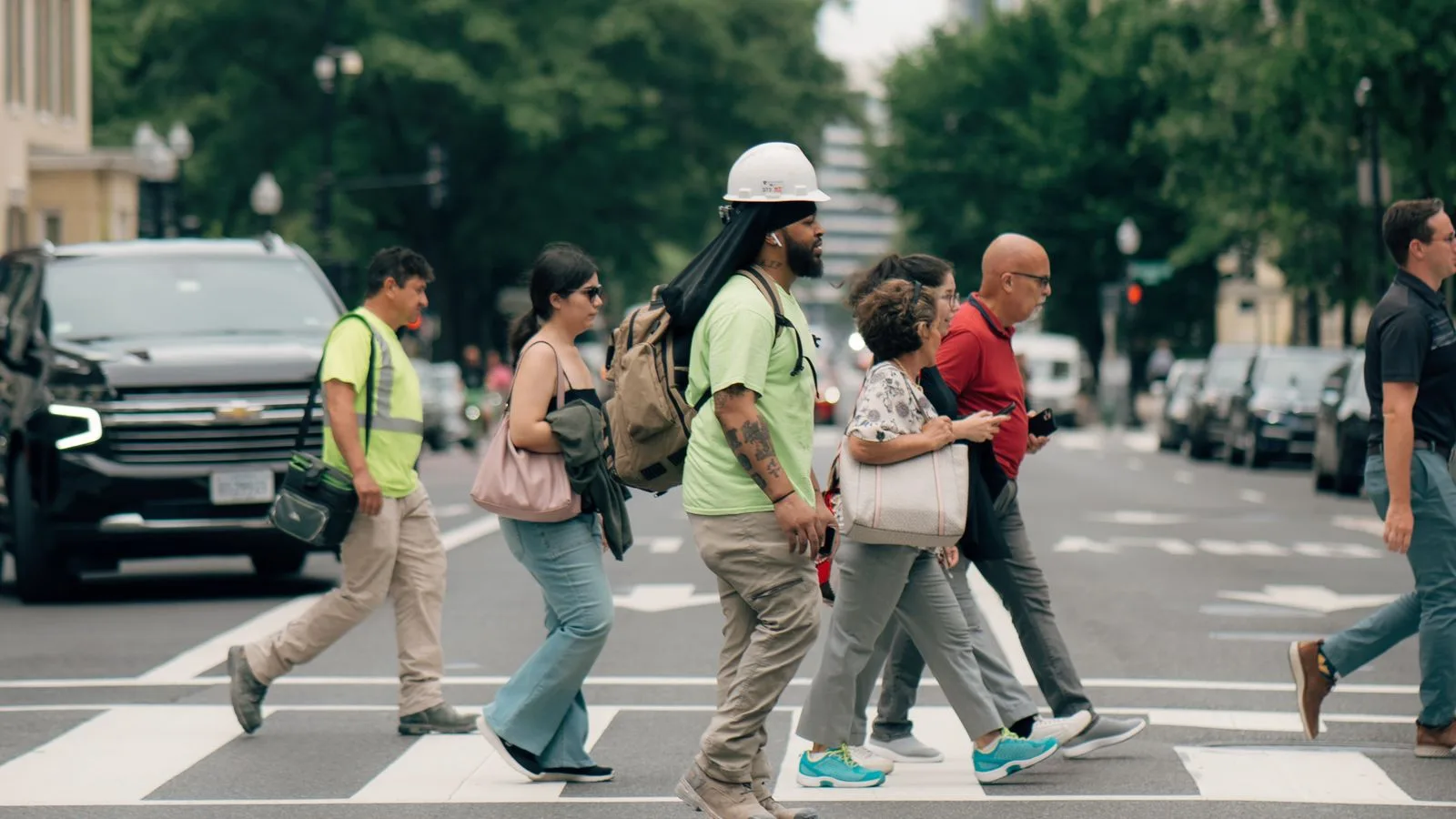
A pedestrian or bicycle accident case in The Woodlands arises when a motor vehicle strikes a person on foot or on a bike at one of the community's crossings, pathway intersections, or arterials such as The Woodlands Parkway or Lake Woodlands Drive. Texas law treats a bicyclist as a vehicle operator with the same rights and duties as a driver, and requires motorists to yield to pedestrians in crosswalks; violating either duty is typically the basis of liability. Because neither pedestrians nor cyclists have any physical protection, impact injuries are severe and often exceed what the initial emergency visit at Memorial Hermann The Woodlands Hospital documents. These claims are governed by the two-year deadline of Tex. Civ. Prac. & Rem. Code § 16.003 and are filed in Montgomery County district court in Conroe.
Why The Woodlands cases are different
The Woodlands was built around a dense network of pathways and crosswalks, but walkers and cyclists still meet turning traffic at busy arterials like The Woodlands Parkway, Lake Woodlands Drive, and the Town Center grid. When a driver fails to yield at a crosswalk, the person on foot or bike absorbs the entire impact.
Right-of-way and driver inattention
Texas law requires drivers to yield to pedestrians lawfully in a crosswalk and to exercise due care around people on foot and on bikes. The failure point in The Woodlands is the busy signalized and stop-controlled crossings near the Town Center, Market Street, and the Pavilion area, where a driver watching for a gap in vehicle traffic turns right or left into someone in the crosswalk. Event weekends at the Cynthia Woods Mitchell Pavilion sharpen the risk, with heavier foot traffic and more out-of-area and impaired drivers leaving venues. These cases turn on right-of-way: who had the walk signal, where the person was in the crossing, and what the driver should have seen. Nearby business cameras and signal data often tell the story, but the retention windows are short, so preservation has to happen fast before footage is overwritten.
Severe injuries and comparative fault
A pedestrian or cyclist struck by a vehicle has no protection, so even a low-speed Woodlands intersection strike can cause fractures, internal injuries, and traumatic brain injury, with serious cases routing to Memorial Hermann The Woodlands Hospital. Insurers commonly respond by blaming the victim, arguing the person darted out or crossed against the signal, which under Chapter 33 proportionate responsibility would cut or bar recovery if their share exceeds 50 percent. That makes objective evidence essential. We work to establish the walk phase, the point of impact, and the driver's line of sight, and we pull the medical chronology together so a fast ER discharge does not undersell a head or spinal injury that surfaces on later imaging. The goal is to keep the focus on the driver's duty to yield, not on the injured person's conduct.
More in The Woodlands
Other ways we help The Woodlands injury victims.



Frequently asked
The Woodlands pedestrian accident questions
- Texas requires drivers to yield to pedestrians lawfully in a crosswalk and to use due care, so a driver who turns into a crossing person is usually at fault. But the insurer may still argue you crossed against the signal. Establishing the walk phase, your position, and the driver's sightline with camera and signal evidence is what protects your claim.
- Signal timing, the location of the crosswalk and point of impact, witness statements, and footage from nearby businesses near the Town Center or Pavilion area. Much of this footage is on short retention cycles and can be erased within weeks, so sending preservation requests early is critical. Physical evidence and medical records build the rest of the picture.
- Possibly. Under Chapter 33 you can recover if you were not more than 50 percent at fault, with your award reduced by your share. Blaming the pedestrian is a standard insurer tactic, so it is met with proof of the walk signal, your path through the crossing, and what the driver had time to see and avoid.
- Yes. The pathway crossings intersect vehicle lanes at points that are sometimes poorly marked or where driver sightlines are limited by landscaping. Where the crossing infrastructure itself contributed to the incident, there may be a claim against The Woodlands Township or a responsible governmental entity, subject to the notice requirements of the Texas Tort Claims Act. We evaluate the roadway conditions as part of every pedestrian and bicycle intake.
- Yes. If a delivery driver or rideshare driver strikes a pedestrian or cyclist, the driver's employer and the platform's commercial auto coverage are potentially in the case alongside the driver's personal policy. Coverage depends on whether the driver was actively on the platform at the moment of the crash, which we verify through app and dispatch records at intake.
- A common severe-injury pattern is lower-extremity fractures from the initial bumper strike, followed by head and cervical-spine trauma from the secondary contact with the hood, windshield, or ground. Even at relatively low speeds, this sequence can produce traumatic brain injury and multiple fractures requiring surgery. Serious cases from Lake Woodlands Drive and The Woodlands Parkway routinely go to Memorial Hermann The Woodlands Hospital and sometimes onward to Memorial Hermann-TMC.
Where we work from
Downtown Austin. The Woodlands clients welcome.
Our office is in downtown Austin; we represent The Woodlands-area clients statewide and travel to The Woodlands for case-specific needs (scene visits, medical-records consultations, court appearances). Home and hospital visits when injuries make travel difficult.
Talk to a The Woodlands pedestrian accident lawyer.
Free case review, no obligation. We'll tell you straight whether we can help.