
Baytown · Pedestrian Accident
Baytown Pedestrian Accident Lawyer
When a motor vehicle strikes a pedestrian or cyclist in Baytown, the case turns on whether the driver failed to yield, keep a proper lookout, or observe the traffic-control devices that govern Tex. Transp. Code Ch. 552 for pedestrians and § 551.101 for cyclists. Baytown's pedestrian environment is shaped by arterials designed primarily for commercial and industrial traffic — Garth Road, Decker Drive, and Spur 330 — where shift-change volume creates the most dangerous conditions for people on foot or two wheels. Texas modified comparative fault under Chapter 33 allows recovery even if the pedestrian or cyclist shares some fault, as long as that share does not exceed 50 percent. Serious cases typically treat initially at Houston Methodist Baytown Hospital on Garth Road or Altus Baytown Hospital on Decker Drive before transfer west on I-10 for definitive care.
Why Baytown cases are different
Pedestrians and cyclists in Baytown move through arterials built for refinery and tanker traffic — Garth Road, Decker Drive, and Spur 330 — where shift-change volume and driver inattention at intersections turn a moment of distraction into a severe or fatal injury for someone on foot or two wheels.
Right-of-way, crosswalks, and driver inattention at Baytown intersections
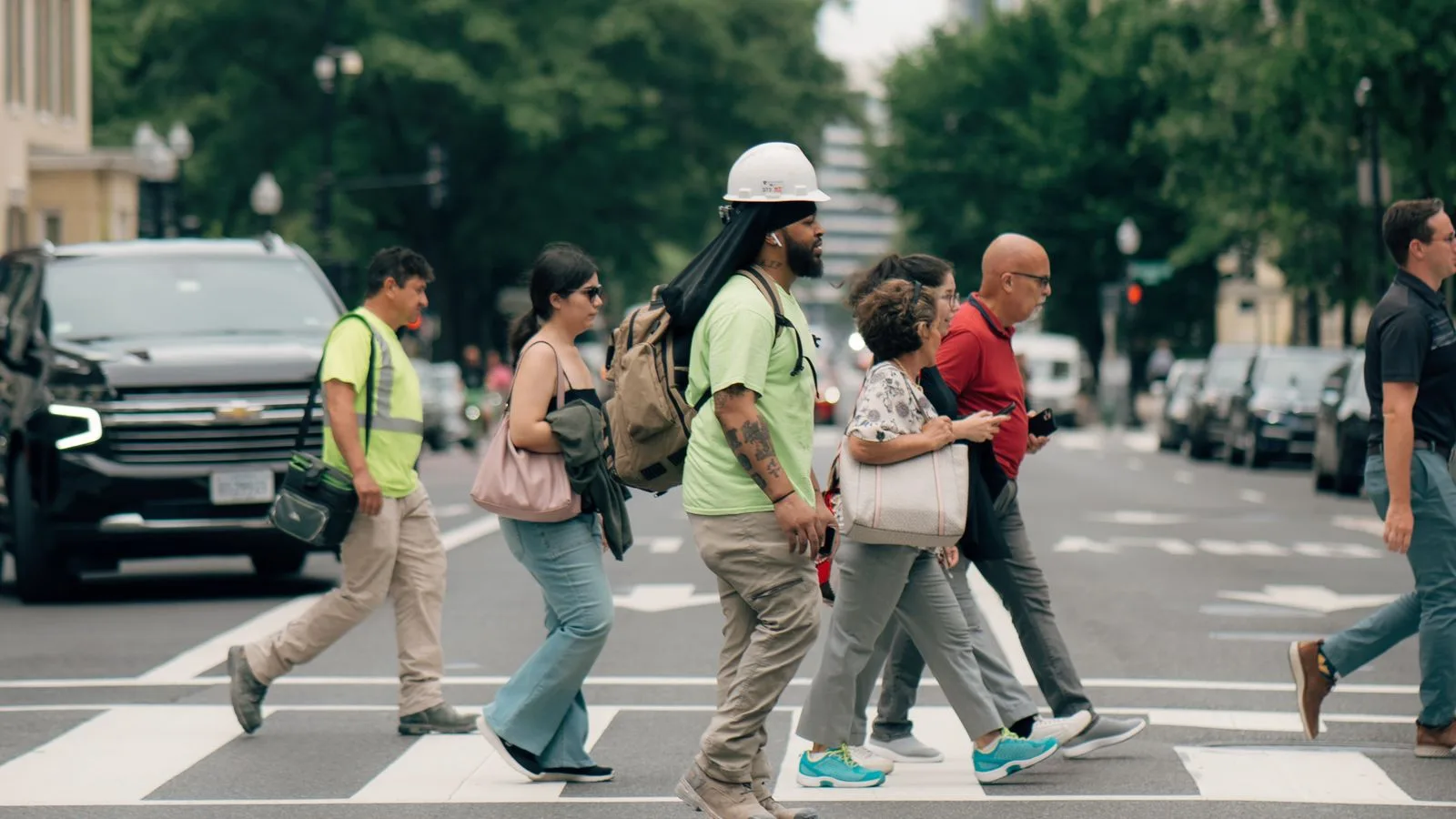
Texas law gives pedestrians the right-of-way in marked crosswalks and at intersections under defined conditions, and drivers owe a duty to keep a proper lookout. The reality on Baytown's main arterials is that intersection collisions concentrate during the refinery and chemical-plant operational cycle — roughly 6-7 a.m., 2-3 p.m., and 10-11 p.m. — when shift traffic is dense and drivers are hurried. A turning driver scanning for a gap in vehicle traffic often fails to see a person in the crosswalk, and a distracted driver looking at a phone simply does not register the pedestrian at all. Establishing the pedestrian's lawful position — in the crosswalk, with the signal, within the right-of-way — is the heart of the liability case, and it frequently rests on intersection sightlines, signal-timing data, and any available camera footage that must be preserved before it overwrites.
Severe injuries and proportionate fault when a driver blames the victim
A person on foot or a bicycle has no protection from a vehicle, so the injuries are severe by default: fractures, internal trauma, and head injuries are routine, and the most serious cases follow the same transfer pattern west on I-10 to Memorial Hermann-TMC inside the 610 Loop that other Baytown trauma cases do. Insurers commonly defend these claims by blaming the pedestrian, arguing they darted out, crossed against the signal, or wore dark clothing at night. Texas proportionate responsibility under Chapter 33 makes that defense consequential: if the pedestrian is assigned more than 50 percent of the fault, recovery is barred entirely, and any assigned percentage reduces the award. That is why the lawful-crossing evidence and the driver's inattention — speed, phone records where appropriate, and the physical point of impact — have to be developed thoroughly rather than conceded.
More in Baytown
Other ways we help Baytown injury victims.



Frequently asked
Baytown pedestrian accident questions
- Not automatically, but a pedestrian lawfully in a marked crosswalk generally has the right-of-way, and a driver who fails to yield has likely breached their duty of care. The driver's insurer may still argue you stepped out suddenly or crossed against the signal. Establishing your lawful position with signal-timing data, sightlines, and any camera footage is the core of proving liability, so preserving that evidence early matters.
- Possibly. Texas applies proportionate responsibility under Chapter 33: you can recover if your share of fault is 50 percent or less, with damages reduced by your percentage. Driver-blames-victim is a standard defense, and beating it depends on the facts: where you were when struck, the signal phase, the driver's speed, and whether the driver was distracted. Thorough liability development keeps your assigned percentage honest.
- Initial care often happens at Houston Methodist Baytown Hospital on Garth Road or Altus Baytown Hospital on Decker Drive. Because pedestrians and cyclists have no protection, severe trauma is common and frequently transfers west on I-10 to Memorial Hermann-TMC inside the 610 Loop, sometimes by Life Flight. The full extent of internal and neurological injury often becomes clear in follow-up care rather than the first emergency visit.
- Yes, and the employer can be held liable as well under respondeat superior if the driver was acting within the scope of their employment. On Baytown's arterials — Garth Road, Decker Drive — a significant share of vehicles are on work errands for the petrochemical operations and their contractors, which means the employer's commercial auto policy may be in play alongside the driver's personal policy. Identifying the vehicle's owner and the driver's employment status at intake determines the full coverage picture.
- Claims against governmental entities, including the City of Baytown, Harris County, and Chambers County, are governed by the Texas Tort Claims Act, which imposes notice deadlines that are much shorter than the two-year statute under Section 16.003. A defective traffic signal or missing marked crosswalk can support a premises-liability claim against the governmental entity responsible for that infrastructure, but the notice must go out promptly or the claim is waived. That analysis runs alongside the claim against the driver.
- Yes. Under Tex. Transp. Code § 551.101, a person riding a bicycle on a roadway has all the rights and duties of a motor-vehicle driver. A driver who fails to yield to a cyclist in their lane, cuts off a cyclist in a turn, or opens a door into a cyclist's path has violated the same rules that govern motor-vehicle interactions. That statutory footing is the starting point for liability, and it answers the argument that a cyclist on a road 'assumed the risk' of being there.
Where we work from
Downtown Austin. Baytown clients welcome.
Our office is in downtown Austin; we represent Baytown-area clients statewide and travel to Baytown for case-specific needs (scene visits, medical-records consultations, court appearances). Home and hospital visits when injuries make travel difficult.
Talk to a Baytown pedestrian accident lawyer.
Free case review, no obligation. We'll tell you straight whether we can help.