
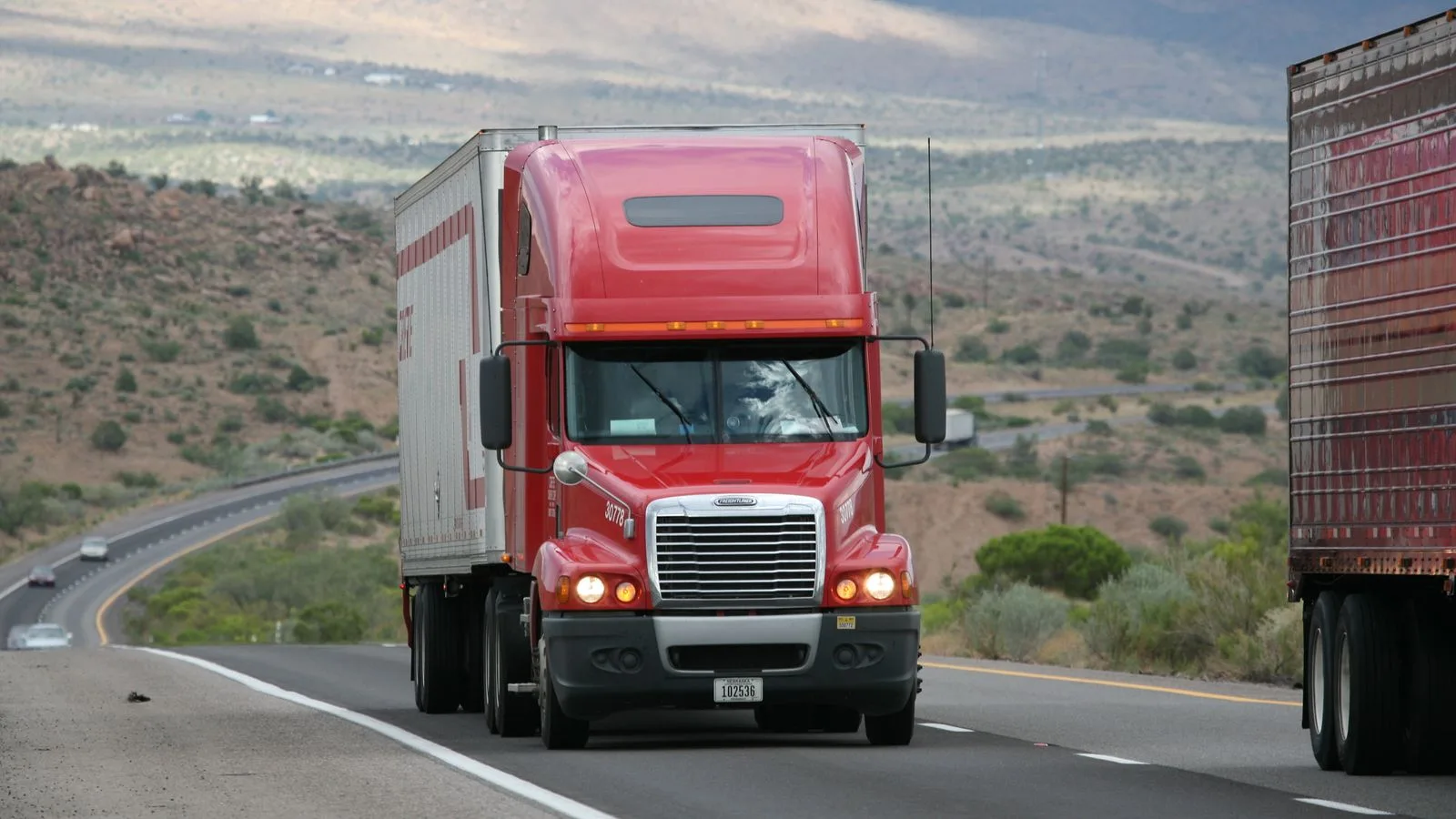
Denton · Truck Accident
Denton Truck Accident Lawyer
A commercial truck accident claim in Denton involves a crash caused by an 18-wheeler or other regulated commercial motor vehicle operating on corridors like I-35E, I-35W, or US-380, where the Federal Motor Carrier Safety Regulations layer on top of ordinary Texas negligence law. The trucking company and its driver are typically both on the hook: the carrier through respondeat superior and potentially direct negligence claims for faulty hiring or training. Because the two-year deadline under § 16.003 runs concurrently with much shorter data-retention windows on ELD logs and onboard event recorders, evidence preservation at the I-35 corridor is time-critical in a way that passenger-car cases are not.
Why Denton cases are different
Denton sits where I-35 fractures into I-35E and I-35W, funneling long-haul freight between Dallas and Fort Worth through one of the busiest commercial corridors in northern Texas. With Oklahoma-domiciled carriers, Tarrant-based trucking companies, and US-380's commercial buildout feeding the local truck mix, 18-wheeler wrecks here carry their own evidentiary demands.
FMCSA rules, ELD data, and hours-of-service on the I-35 corridor
Commercial trucks moving through the Denton split are governed by Federal Motor Carrier Safety Administration regulations that ordinary passenger cars never face. Hours-of-service limits cap how long a driver may operate before mandatory rest, and electronic logging devices record drive time, engine hours, and movement in ways that can confirm or contradict a driver's account. After a serious crash, the carrier's data, including ELD records, dispatch logs, telematics, and the truck's onboard event recorder, becomes critical, but much of it is subject to short retention and routine overwriting. A spoliation-style preservation letter sent promptly to the motor carrier is often the difference between proving a fatigued or over-hours driver and being left with only the police report. Drug-testing records, maintenance files, and driver-qualification paperwork round out the FMCSA picture that distinguishes a truck case from a car case.
Employer liability and higher commercial policy limits
When a trucker causes a Denton crash in the course of employment, the carrier is generally responsible for the driver's negligence, and independent claims for negligent hiring, training, supervision, or retention can attach directly to the company. That matters because commercial trucking policies carry far higher limits than personal auto coverage, often reaching the seven-figure range required for interstate carriers. Identifying every responsible entity, the driver, the motor carrier, a separate trailer owner, a broker, or a shipper, expands the coverage available to a seriously injured client. Venue also takes on added weight here: a trucking company based in Tarrant County or an Oklahoma-domiciled freight carrier can open alternative venues under section 15.002 that shift jury composition and trial pacing. Those decisions are weighed early, before the carrier's defense team has fully shaped the record.






Frequently asked
Denton truck accident questions
- Electronic logging device data, dispatch and telematics records, and the truck's onboard event recorder can be overwritten on short cycles, and camera footage from nearby businesses along corridors like US-380 is often gone in 14 to 30 days. A prompt preservation letter to the motor carrier and early evidence work give the best chance of locking down hours-of-service and movement data before it ages out.
- Under Texas law, an employer is generally responsible for an employee's negligence committed in the course of work, and the carrier can also face direct claims for negligent hiring, training, or supervision. Because commercial policies carry much higher limits than personal auto coverage, identifying the carrier and any related entities, brokers, or trailer owners materially expands the coverage available to an injured client.
- It depends. A crash in Denton involving a local defendant fits Denton County venue, but a carrier headquartered in Tarrant County or domiciled in Oklahoma can open alternative venues under section 15.002. That choice can affect which jury hears the case and how quickly it moves to trial, so it is analyzed before filing rather than treated as automatic.
- Not easily in Texas. Under 49 C.F.R. § 376.12, a motor carrier whose operating authority the truck runs under remains responsible for the driver's conduct regardless of an independent-contractor label. Courts look at actual control, not just the contract language. Identifying the operating authority and the lease structure is part of the early analysis on every Denton truck file.
- Commercial drivers operating on I-35 through Denton are governed by the Federal Motor Carrier Safety Regulations, which set limits on driving hours under Parts 395, require pre-trip and post-trip inspections under Part 396, mandate drug and alcohol testing under Part 382, and set driver-qualification standards under Part 391. A violation of any of these regulations can establish negligence per se or support an exemplary-damages claim against the carrier.
- ELD data records the truck's engine activity and movement hour by hour, and the driver's logs must account for all time in the prior week. Comparing the ELD download against the required hours-of-service limits under Part 395 can show whether the driver was beyond the 11-hour driving limit or the 14-hour on-duty window. That analysis depends on preserving the data promptly, because carriers can lawfully recycle ELD records on short cycles.
Where we work from
Downtown Austin. Denton clients welcome.
Our office is in downtown Austin; we represent Denton-area clients statewide and travel to Denton for case-specific needs (scene visits, medical-records consultations, court appearances). Home and hospital visits when injuries make travel difficult.
Talk to a Denton truck accident lawyer.
Free case review, no obligation. We'll tell you straight whether we can help.