
Truck accidents · Subcategory
Jackknife Truck Accident Lawyer in Texas
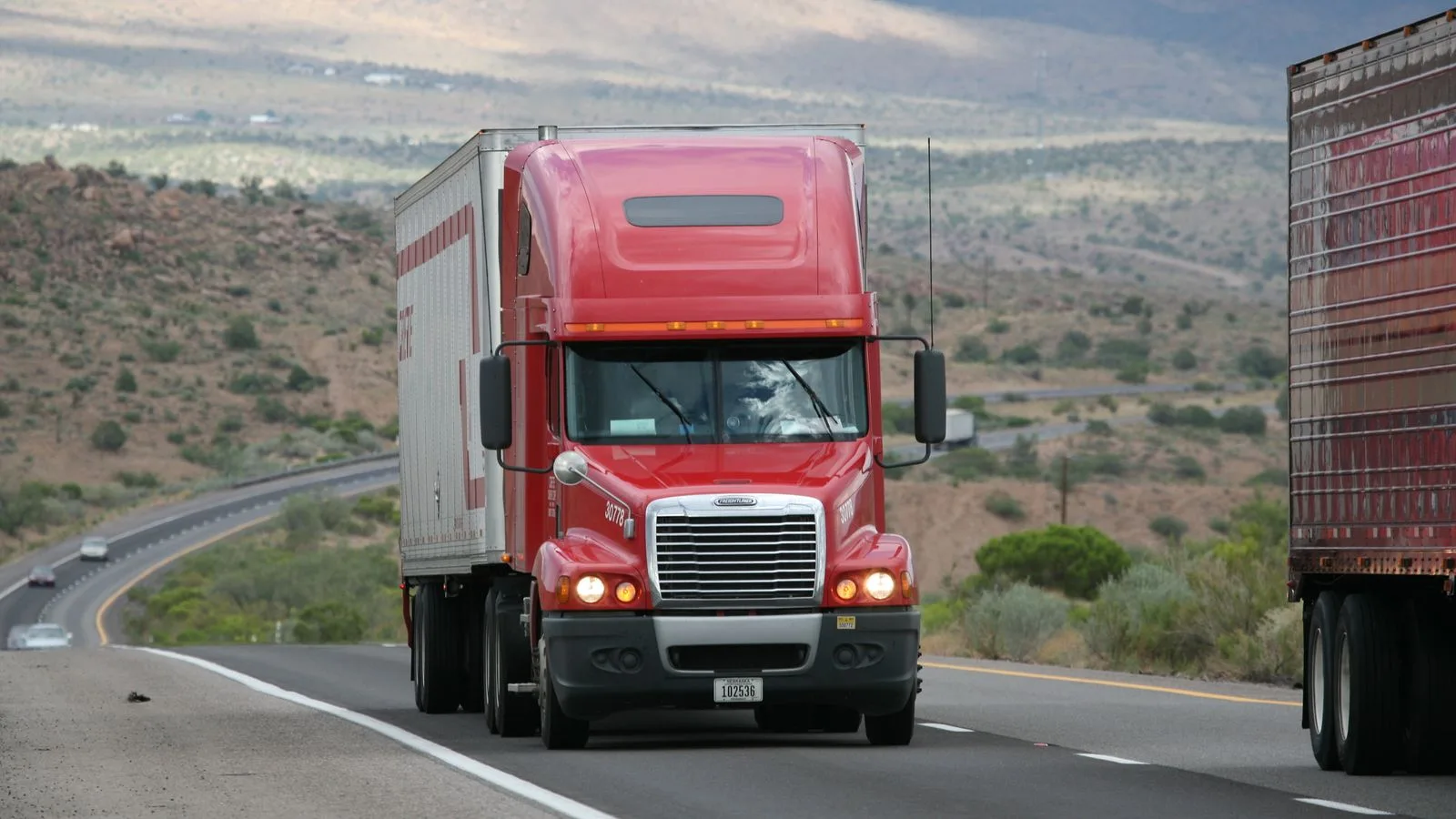
A jackknife happens when a tractor-trailer's trailer swings out of alignment with the cab and folds toward it at a sharp angle, often sweeping across two or three lanes. The dynamic almost always points back to one of three causes: a braking error on the tractor's drive axles, a maintenance failure in the brake or suspension system, or a driver decision to operate at unsafe speed for road conditions. Each cause maps to a different defendant and a different proof framework under Texas law and 49 CFR.
The physics behind a jackknife
When the tractor's drive wheels lose traction relative to the trailer — most commonly because the driver applied the foot brake too aggressively on a wet, icy, or downhill surface — the heavier trailer continues forward under its own momentum and rotates around the fifth wheel. Modern tractors equipped with anti-lock braking systems and trailer-brake hand valves are designed to prevent this; many jackknife crashes turn out to involve either disabled ABS warning lights, a mismatched tractor-trailer brake balance, or a driver who never learned to use the trailer brake separately on slick roads.
Brake-system failures and the inspection record
Under 49 CFR § 396.3, motor carriers must systematically inspect, repair, and maintain every vehicle in their fleet, and § 396.11 requires the driver to prepare a daily vehicle inspection report (DVIR) at the end of each driving day. Brake-system defects — out-of-adjustment slack adjusters, glazed shoes, leaky air lines, defective ABS — are the single most common out-of-service violation in Texas roadside inspections each year. In a jackknife case, the maintenance file, the last six DVIRs, the last annual inspection certificate, and any recent CVSA inspection reports are the first records we subpoena.
Weather, road condition, and the driver-judgment piece
Texas weather complicates trucking more than most states realize. A sudden Hill Country thunderstorm, an early-morning fog bank in the river bottoms east of San Antonio, or a rare February freeze that ices the Houston-area overpasses each create conditions where the prudent move is to slow dramatically or get off the road. 49 CFR § 392.14 obligates the driver to use 'extreme caution' when hazardous conditions affect visibility or traction and to discontinue operation if conditions become sufficiently dangerous. A driver who ran 65 mph into a known ice event has a hard time explaining the choice to a Texas jury.
Multi-vehicle chain reactions and apportionment
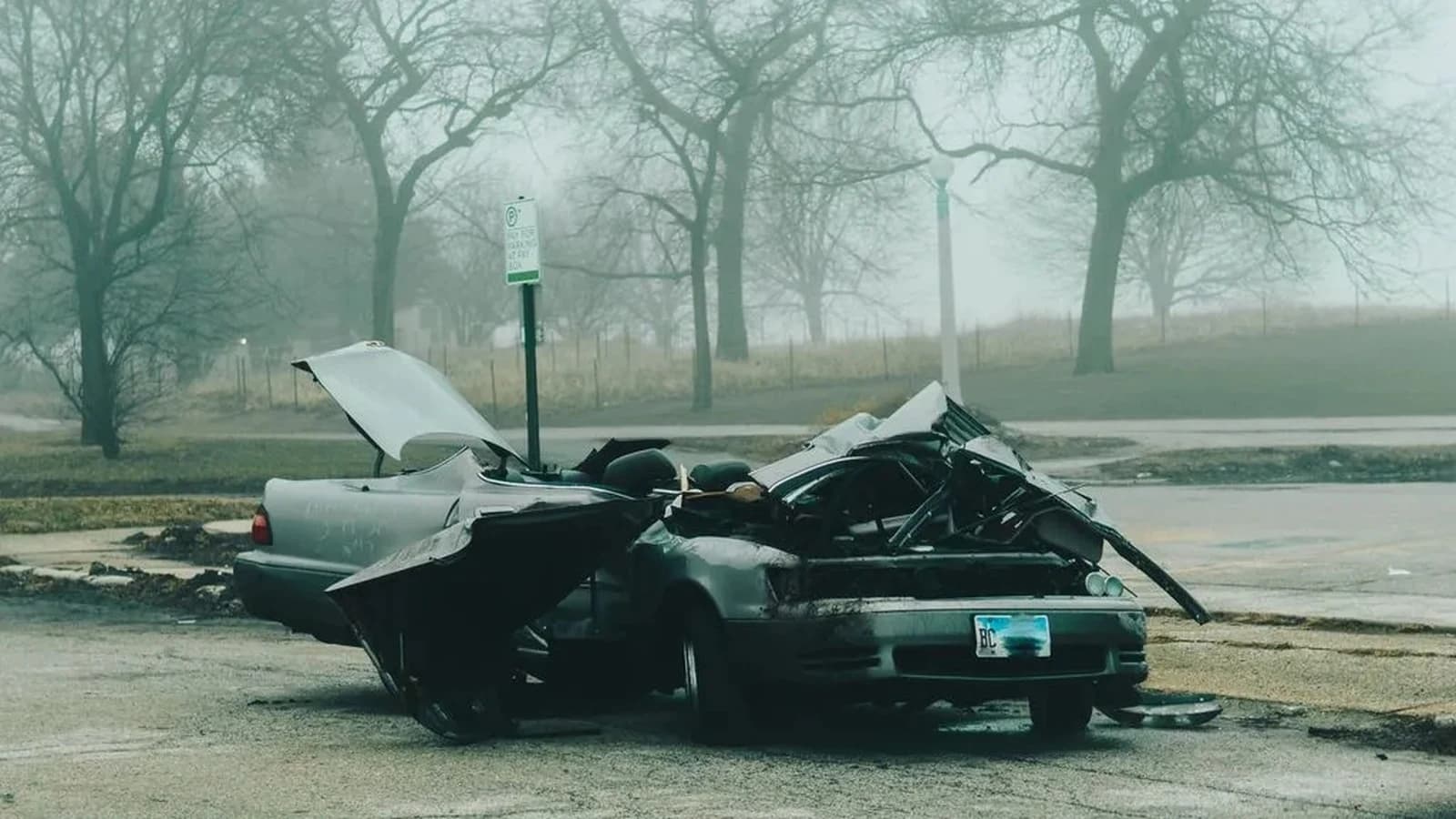
A jackknifing trailer that sweeps across two lanes on I-35 at rush hour rarely involves just one collision. The typical fact pattern is a primary impact with one or two vehicles, secondary impacts from following traffic, and a debris field that catches a third wave of cars. Texas's modified comparative-fault rules (Tex. Civ. Prac. & Rem. Code § 33.001) apply to every claimant individually; a driver who hit the jackknifed trailer because they were following too close at 75 mph may carry some fault, but a driver who was struck by the trailer itself almost never does. The apportionment analysis has to be run claimant by claimant.


Frequently asked
Questions Texas accident victims ask us
- Three causes account for the overwhelming majority: aggressive or improper braking on the tractor's drive axles (often on wet, icy, or downhill surfaces), a brake-system imbalance or failure between tractor and trailer, or operating speed that is unsafe for the road and weather. ABS, when functional, is designed to prevent jackknife dynamics; many jackknife cases involve a defective or disabled ABS system, an out-of-adjustment slack adjuster, or a driver who has never been properly trained to brake an empty versus loaded trailer in adverse conditions.
- Usually, but not always solely. Driver inputs cause most jackknives, but the maintenance condition of the brake system often shares fault, and the carrier carries direct liability for maintenance failures. In cases involving a sudden ABS failure or a defective brake component, the truck manufacturer or a third-party maintenance shop may share liability. Cases involving a vehicle that swerved in front of the tractor at the wrong moment can shift fault between drivers; this is heavily fact-dependent and not something to assume either way without the evidence.
- 49 CFR § 392.14, incorporated into Texas regulation, requires drivers to use 'extreme caution' when hazardous conditions reduce visibility or traction, and obligates them to discontinue operation when conditions become sufficiently dangerous to be unsafe. There is no fixed speed reduction in the regulation; the question is whether the driver's choices matched a reasonable driver's choices in the same conditions. Texas juries respond strongly to a driver who pushed through known dangerous conditions on a schedule pressure.
- Yes, in most cases. The cars caught in a jackknife chain reaction are foreseeable victims of the truck's conduct under Texas proximate-cause analysis. The driver who hit you may also bear some fault — they were following too close or driving too fast for conditions — and that gets apportioned under Tex. Civ. Prac. & Rem. Code § 33.001. The trucking-side defendants typically remain on the hook for the share of fault traceable to the underlying jackknife.
- Subpoenaed maintenance and inspection records (49 CFR § 396 documents), the post-crash mechanical inspection by DPS or the carrier's repair shop, brake-stroke measurements taken at the scene if law enforcement performed a Level 1 inspection, photographs of brake shoes and slack adjusters, the ECM brake-event log, and (in serious cases) a retained brake-systems expert's analysis. Out-of-adjustment slack adjusters are visible on a properly conducted post-crash inspection, but only if the truck is preserved before repair.
- Very fast. The truck is often repaired and back in service within days; the brake components that would show out-of-adjustment status get reset during repair. ECM and ELD data can be overwritten as the tractor continues to operate. Skid marks and debris fields on the roadway are gone after the next rain. Witness recollection of weather and visibility blurs within a week. A first-week preservation letter and an early on-site inspection are the only reliable ways to lock the evidence in.
- Both. The trailer carries its own brakes, suspension, and lighting and is subject to its own inspection requirements under 49 CFR Part 396. In jackknife cases, trailer-brake condition is often more relevant than tractor-brake condition because the imbalance — strong tractor brakes against weak trailer brakes, or vice versa — is what initiates the rotation. If the trailer is owned by a different entity than the tractor (common in dropped-trailer freight), that entity is a separate potential defendant with separate insurance.
- It can try. Carriers sometimes argue the driver acted outside policy or training and the company should not be responsible. Texas respondeat superior law is narrow on this point: if the driver was on the clock and engaged in work the carrier hired them to do, course-and-scope applies even if the driver made mistakes. Where a defense like this surfaces, it is often a tell that the driver's qualification or training file has problems the carrier would rather not have litigated.
Let's talk about your case.
Free case review, no obligation. We'll tell you straight whether we can help.