
Leander · Truck Accident
Leander Truck Accident Lawyer
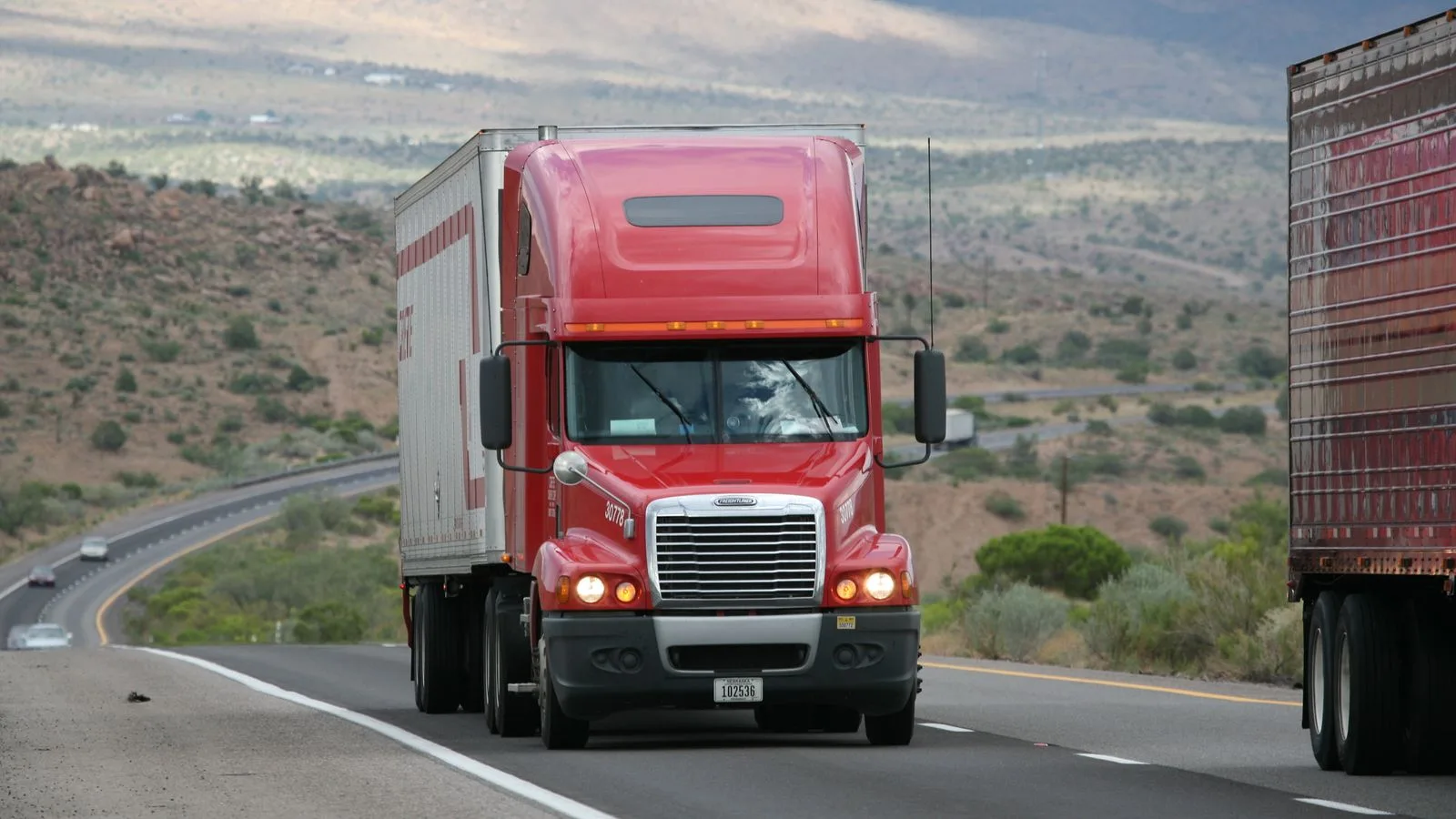
A commercial truck accident case in Leander involves a crash with a tractor-trailer or heavy work truck operating under the Federal Motor Carrier Safety Regulations on corridors like US-183, where freight traffic heading toward Liberty Hill and Lampasas mingles with the concrete and aggregate trucks supplying Leander's construction boom. The regulatory framework layers federal requirements for hours of service, driver qualification, and vehicle maintenance onto Texas negligence law, and the case is built around the carrier's own records — ELD logs, ECM downloads, and maintenance files — before they cycle out of retention. These cases file in the Williamson County district courts in Georgetown, and the carrier's minimum federal coverage of $750,000 typically exceeds what an individual driver carries.
Why Leander cases are different
Leander's growth has turned US-183 into a working freight corridor carrying through-traffic toward Liberty Hill and Lampasas alongside the construction and delivery trucks feeding the subdivisions east of the highway, and the toll-to-surface speed change turns an ordinary merge into a severe wreck the moment an eighteen-wheeler is involved.
Federal rules and the evidence that disappears fast
Interstate carriers running US-183 through Leander answer to the Federal Motor Carrier Safety Regulations, which govern hours of service, driver qualification, and vehicle maintenance. Modern tractors log driving time on an electronic logging device, and that ELD data, paired with the engine control module download, often reveals whether a fatigued or over-hours driver was behind the wheel before a Leander collision. The complication is that this evidence sits in the carrier's control and can cycle out under routine retention policies, and the longer transport time to a Cedar Park or Round Rock ER can delay the moment anyone realizes how serious the injury is. A preservation and spoliation letter has to reach the company quickly to lock down the ELD records, dispatch logs, maintenance files, and recorded data before the tractor is repaired and returned to service.
Reaching the carrier and the deeper policy layers
A truck wreck on US-183 rarely stops at the driver. Under Texas respondeat superior principles, a motor carrier answers for the negligence of a driver acting within the scope of employment, and independent claims for negligent hiring, training, supervision, and retention can reach the company directly. That matters in Leander, where the commercial mix runs from interstate freight heading north past the toll terminus to local concrete, aggregate, and delivery trucks serving the rapidly developing residential arterials. Commercial policies carry far higher limits than the thirty-thousand-dollar personal minimum, but the carrier's rapid-response team moves to control the narrative within hours. Identifying every responsible entity, whether a carrier, a broker, a shipper, or a leasing company, is what separates a thin recovery from one that matches a serious injury.
More in Leander
Other ways we help Leander injury victims.




Frequently asked
Leander truck accident questions
- Major carriers dispatch rapid-response teams to document the scene before evidence settles, and the rural stretches of US-183 north of Leander have limited camera coverage, which makes that early scene work even more decisive. Their goal is to shape the liability picture in the carrier's favor. You are entitled to your own investigation, and a prompt preservation letter forces the company to keep the ELD, dispatch, and maintenance records that their team is already collecting for the defense.
- Often, yes. Beyond the driver, the motor carrier can be liable under respondeat superior and for negligent hiring, training, supervision, and retention. Depending on the load and the arrangement, a broker, shipper, or leasing company may share responsibility. On a Leander construction-supply truck feeding the subdivisions east of US-183, the contractor or fleet owner's commercial policy is frequently where the real coverage lives, well beyond the driver's personal limits.
- It can. Because Leander has no full-service hospital, EMS transports to Cedar Park Regional, Ascension Seton Williamson in Round Rock, or Dell Seton in Austin for serious trauma, and that ten-to-twenty-mile ride shows up in the medical chronology. Carriers sometimes argue the transport timing against you, so we document the EMS triage decision and the trauma diversion to keep the record straight rather than letting the defense reframe it.
- Interstate carriers running US-183 through Leander operate under the Federal Motor Carrier Safety Regulations, 49 C.F.R. Parts 350-399. Those regulations set limits on daily driving hours and require a 10-hour off-duty reset, mandate pre-trip inspections, govern driver qualification and drug testing, and set minimum maintenance standards. A violation of any of those requirements is evidence of negligence, and in egregious cases can support a gross-negligence finding that opens the carrier to exemplary damages under Texas law.
- Within days, not weeks. ELD data and dispatch records are the most time-sensitive evidence, and carriers are not required to keep them indefinitely. Federal regulations set baseline retention windows, but they are short, and once a preservation letter is served the carrier's legal obligation to hold the records attaches immediately. Delaying that letter by even a week risks losing the data that establishes hours-of-service violations or a falsified inspection log.
- The independent contractor label does not automatically shield the motor carrier. Under 49 C.F.R. § 376.12, a carrier whose operating authority covers a leased owner-operator remains liable for that driver's conduct as if the driver were an employee. Texas courts also look at the actual level of control the carrier exercised over the driver's route and work, regardless of the contract's characterization. The carrier's insurer cannot escape liability simply by pointing to the independent contractor agreement.
Where we work from
Downtown Austin. Leander clients welcome.
Our office is in downtown Austin; we represent Leander-area clients statewide and travel to Leander for case-specific needs (scene visits, medical-records consultations, court appearances). Home and hospital visits when injuries make travel difficult.
Talk to a Leander truck accident lawyer.
Free case review, no obligation. We'll tell you straight whether we can help.