
Longview · Truck Accident
Longview Truck Accident Lawyer
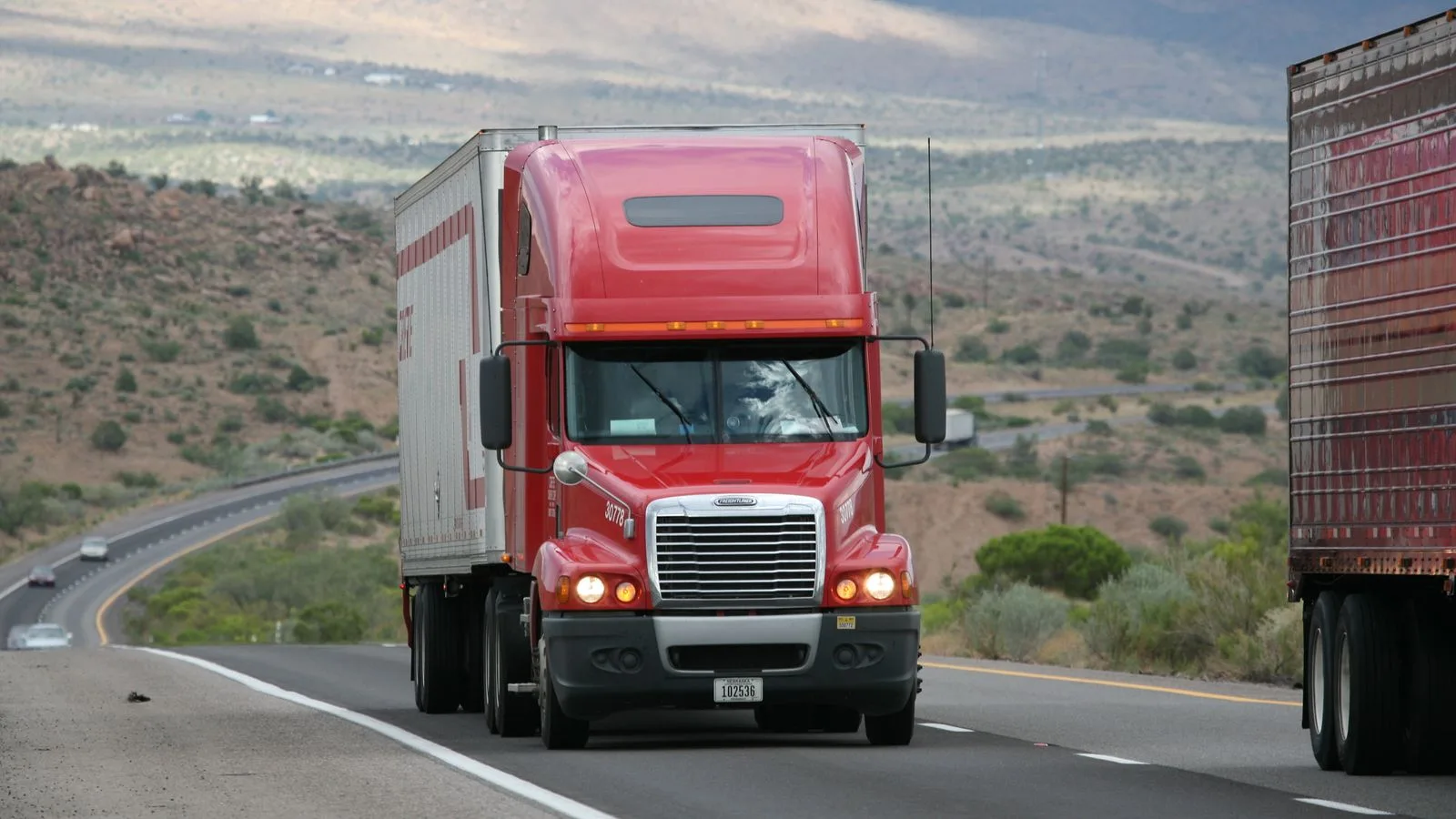
A commercial truck accident claim in Longview involves a collision with an 18-wheeler, tractor-trailer, or oilfield service vehicle on corridors like I-20, US-80, or the county roads connecting Longview, Kilgore, and Gladewater; and it is governed by a double layer of law that does not apply to ordinary car crashes. Federal Motor Carrier Safety Regulations (49 C.F.R. Parts 350–399) set mandatory standards for hours of service, driver qualification, and vehicle maintenance, and Texas DOT enforces those rules on the state side. Because the motor carrier and the driver are typically co-defendants under respondeat superior, the company's commercial insurance, not the driver's personal policy, is the primary source of recovery. Cases venued in Gregg County district court usually involve more discoverable evidence and higher available coverage than any comparable passenger-vehicle file.
Why Longview cases are different
I-20 through Gregg County is the heaviest freight artery in East Texas, and Longview's oil-and-gas service economy puts vacuum trucks, water haulers, and frac sand transports on regional roads year-round. A collision with one of those commercial operators is a different case than an ordinary wreck: federal rules and layered policies enter the file immediately.
Why a Longview truck case is different
Long-haul carriers running I-20 between the Dallas metro and the Louisiana line, along with the oilfield service fleets based around Longview, Kilgore, and Gladewater, are commercial motor carriers regulated by the FMCSA and Texas DOT. That regulatory layer creates evidence that does not exist in a passenger-car crash: driver-qualification files, hours-of-service logs, electronic logging device (ELD) data, the engine-control-module download, post-crash drug-and-alcohol testing, the carrier's safety record, and maintenance history all become discoverable. Longview's energy-services base puts commercial defendants into the East Texas case mix at a higher rate than population alone would predict. Because the freight density on I-20 is so high, a single missed brake application near the Estes Parkway interchange can stack multiple vehicles. We pull the FMCSA SAFER profile at intake and treat the regulatory file as the spine of the case.
Employer liability, ELDs, and the umbrella layer
When a tractor or service vehicle is operating in furtherance of the carrier's business, the company, not just the driver, is on the hook, which is what makes commercial coverage so much deeper than a personal auto policy. Oilfield service operators and freight carriers running the I-20 corridor frequently carry commercial-auto limits well above the state minimum and often sit beneath substantial umbrella layers, so the real ceiling on a serious file is far higher than minimum-limits work. The danger is evidence loss: ELD and ECM data, hours-of-service logs, and any forward-facing dashcam footage can be overwritten or recycled on routine retention cycles. We send spoliation and preservation letters immediately — covering the tractor's ECM, the driver-qualification file, post-crash testing, and maintenance records — and we request TxDOT traffic-management footage of the I-20 corridor before it cycles out near 30 days.
More in Longview
Other ways we help Longview injury victims.




Frequently asked
Longview truck accident questions
- Yes. Vacuum trucks, water transports, frac sand haulers, and crew-cab service fleets are commercial motor carriers regulated by FMCSA and Texas DOT. Driver-qualification files, hours-of-service logs, ELD data, post-crash drug-and-alcohol testing, and maintenance records all become discoverable. The carrier's commercial-auto policy typically carries limits well above state minimums and frequently sits beneath an umbrella layer. We send spoliation letters immediately and pull the FMCSA SAFER report at intake.
- Quickly. ELD and engine-control-module data, hours-of-service logs, and dashcam footage can be overwritten on the carrier's normal retention cycle, sometimes within weeks. TxDOT traffic-management camera footage at I-20 interchanges typically overwrites in about 30 days. A preservation letter sent right after the crash, tailored to the specific equipment involved, is what stops a routine purge from erasing the proof of fault.
- Usually, yes. When the driver is operating the vehicle in furtherance of the company's business, the carrier is generally liable for the crash, and its commercial and umbrella policies, not the driver's personal coverage, become the real source of recovery. The carrier's hiring, training, supervision, and maintenance decisions can also create independent negligence theories that the FMCSA file and maintenance records help establish.
- Under Tex. Civ. Prac. & Rem. Code Section 15.002, suit may generally be filed where the events occurred — Gregg County district court if the crash happened in that county — or where a defendant has its principal office in Texas. A commercial defendant based outside East Texas can open alternative venue options. We evaluate all available venues at intake because the choice affects jury composition and the local defense bar.
- Federal Motor Carrier Safety Regulations under 49 C.F.R. Part 395 limit most long-haul drivers to 11 hours of driving within a 14-hour on-duty window, with mandatory rest resets. A violation of those limits, documented by ELD data or logbook discrepancies, is evidence of carrier negligence and can support a gross-negligence theory if the carrier was aware of the pattern. In a serious Longview crash, the hours-of-service record is among the first things we demand.
- Two years from the date of the crash under Tex. Civ. Prac. & Rem. Code Section 16.003. But the practical deadline for preservation is measured in days, not years: ELD data and ECM downloads, forward-facing camera footage, and post-crash drug-and-alcohol testing results all have short cycles. Waiting to hire a lawyer while the evidence window closes is the most common avoidable mistake in these files.
Where we work from
Downtown Austin. Longview clients welcome.
Our office is in downtown Austin; we represent Longview-area clients statewide and travel to Longview for case-specific needs (scene visits, medical-records consultations, court appearances). Home and hospital visits when injuries make travel difficult.
Talk to a Longview truck accident lawyer.
Free case review, no obligation. We'll tell you straight whether we can help.