
Lubbock · Truck Accident
Lubbock Truck Accident Lawyer
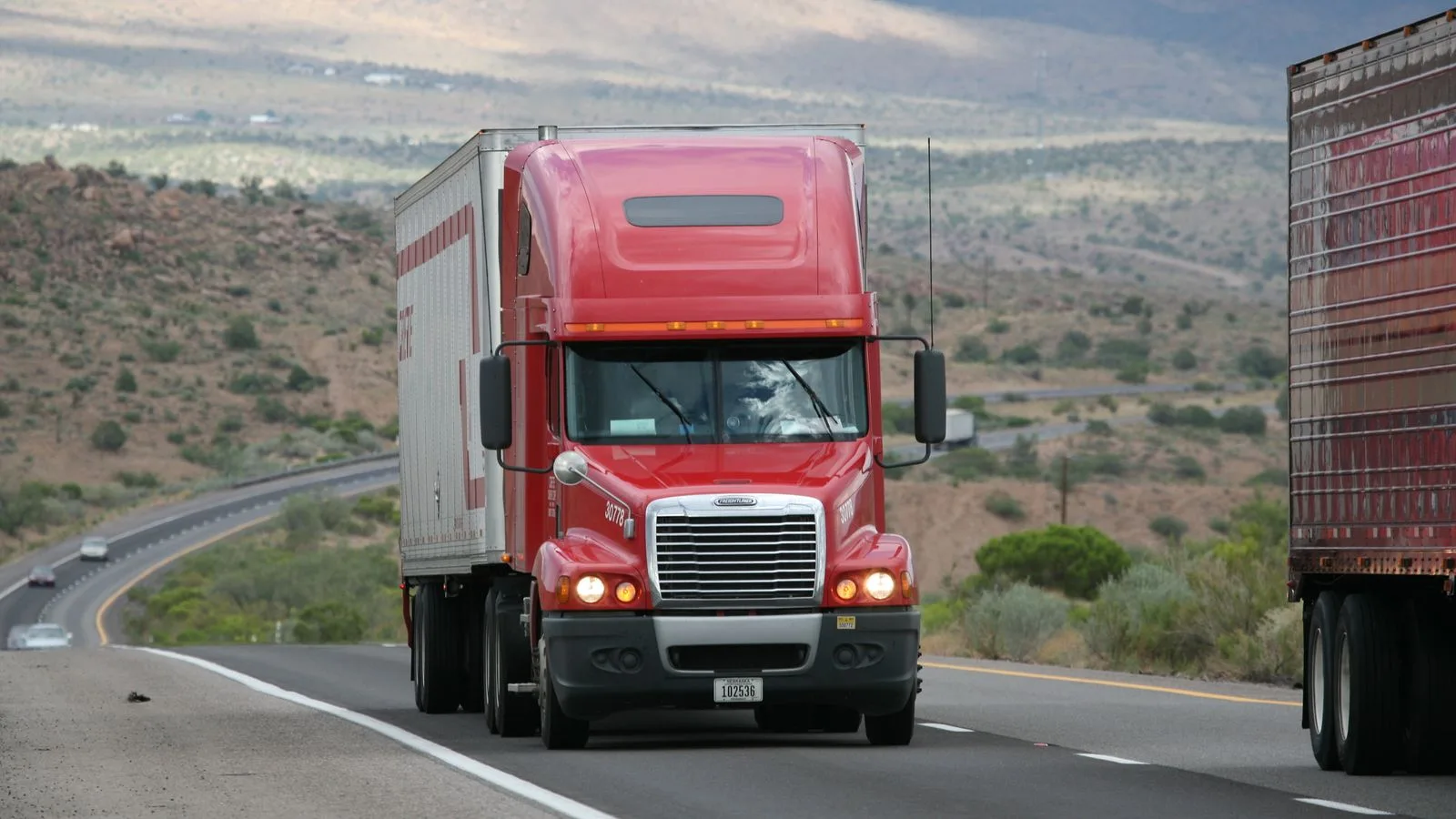
A truck accident case on the South Plains involves a crash with a commercial motor vehicle — a grain hauler on US-87, a cotton-module truck on US-82, or a long-haul 18-wheeler on I-27 — where the Federal Motor Carrier Safety Regulations layer on top of Texas fault law. Lubbock County district court hears these cases for crashes occurring in the county, and the two-year statute under Tex. Civ. Prac. & Rem. Code Section 16.003 begins running at injury. What distinguishes truck cases from ordinary car claims is the regulated documentation — ELD logs, driver-qualification files, post-crash drug testing — that can prove fatigue or maintenance failures but disappears fast if not preserved with a spoliation letter within days of the crash.
Why Lubbock cases are different
Lubbock's commercial-vehicle docket is driven by agricultural freight that does not look like urban Texas: cotton-module haulers, grain trucks, and anhydrous ammonia tankers on US-82, US-84, and US-87, alongside the long-haul flow up I-27 toward Amarillo and the Panhandle corridor. Each is governed by the federal motor-carrier framework and each carries its own preservation playbook.
The agricultural truck corridors and the FMCSA framework
US-82 east toward Crosbyton and west toward Brownfield, and US-87 north and south, are the heaviest agricultural-truck corridors feeding the metro, while I-27 runs the long-haul Panhandle freight. Most cotton-module haulers, grain trucks, and tankers running for commercial gins, elevators, and cooperatives are FMCSA-regulated commercial motor vehicles governed by 49 C.F.R. Parts 350-399, controlling hours-of-service limits, electronic logging device records, driver-qualification files, and post-crash drug and alcohol testing. After a serious crash, the highest-value evidence lives in the carrier's systems and is overwritten on routine cycles, so the early move is a spoliation letter covering the tractor's ECM, the ELD records for the prior fourteen days, dispatch communications, fuel and toll receipts, the driver-qualification file, and any cotton gin loading and dispatch documentation. Harvest-season scheduling pressure makes a fatigue picture: driving past the on-duty limit, a recurring theme once those logs are pulled and read.
The agricultural exemption and layered commercial coverage
One nuance distinguishes these cases from ordinary freight wrecks: a subset of agricultural-implement and farm-related operations fall within federal motor-carrier agricultural exemptions to certain hours-of-service rules. That exemption analysis is fact-specific: whether the vehicle was running for a commercial gin or cooperative, the radius of operation, and the season all matter — and it runs at intake. Either way, the carrier's insurance and the underlying federal documentation drive the case. Beyond the driver, the carrier or cooperative that employed them is usually on the hook through respondeat superior, and commercial operations typically carry far higher policy limits than a passenger-vehicle driver. Where a carrier or broker is headquartered outside Lubbock County — a Dallas-based carrier or a Houston-based broker — alternative venue analyses open up under Section 15.002. Identifying every responsible entity and every layer of primary and excess coverage is what separates a commercial-truck case from a routine auto claim.
More in Lubbock
Other ways we help Lubbock injury victims.






Frequently asked
Lubbock truck accident questions
- Most are, with one nuance. A subset of agricultural and farm-implement operations fall within federal motor-carrier agricultural exemptions to certain hours-of-service rules. But most cotton and grain haulers running for commercial gins, elevators, or cooperatives are still FMCSA-regulated, subject to ELD, driver-qualification, and drug-and-alcohol testing rules. The exemption analysis is fact-specific and runs at intake. Either way, the carrier's coverage and the federal documentation drive the case.
- Quickly. The most decisive evidence — ECM data, ELD logs, dispatch records, and the gin's loading documentation — lives in the carrier's systems and is overwritten on routine cycles, sometimes within days or weeks. A spoliation letter sent early locks that material in place. On rural state highways outside Lubbock County, the physical-scene window is also tighter and witnesses are thinner, so the preservation work cannot wait.
- Often, yes. FMCSA-regulated trucks carry electronic logging devices that record on-duty and driving time. Pulling the prior fourteen days of ELD data against the hours-of-service rules can show whether the driver was past his on-duty limit at the moment of impact, a recurring picture in harvest-season files, when scheduling pressure pushes drivers past the legal window. That documentation only survives if it is preserved before the carrier's routine overwrite cycle.
- Several parties may be liable depending on the facts. The motor carrier employing the driver is typically reached through respondeat superior and direct negligence theories for hiring, training, and supervision. If a separate shipper loaded the truck improperly, they can be liable for cargo-related crashes. Maintenance contractors can be liable for brake or tire failures. We map the full defendant set at intake because commercial operations carry coverage that does not exist in ordinary auto cases.
- Venue under Tex. Civ. Prac. & Rem. Code Section 15.002 generally follows the crash location, so a wreck in Hockley or Lynn County would typically be filed there rather than in Lubbock County district court. However, where the carrier or defendant is headquartered in or maintains a principal office in Lubbock County, alternative venue analysis can shift the case. We run this at intake because the South Plains jury composition can vary meaningfully across county lines.
- Federal regulations require a minimum of $750,000 in liability coverage for most FMCSA-regulated carriers, and that floor rises to $5 million for hazardous materials loads. Many commercial carriers operating on I-27 and the agricultural corridors carry excess or umbrella layers well above those minimums. Identifying the full coverage stack — primary, excess, umbrella — is one of the first tasks after a serious commercial-truck crash.
Where we work from
Downtown Austin. Lubbock clients welcome.
Our office is in downtown Austin; we represent Lubbock-area clients statewide and travel to Lubbock for case-specific needs (scene visits, medical-records consultations, court appearances). Home and hospital visits when injuries make travel difficult.
Talk to a Lubbock truck accident lawyer.
Free case review, no obligation. We'll tell you straight whether we can help.