
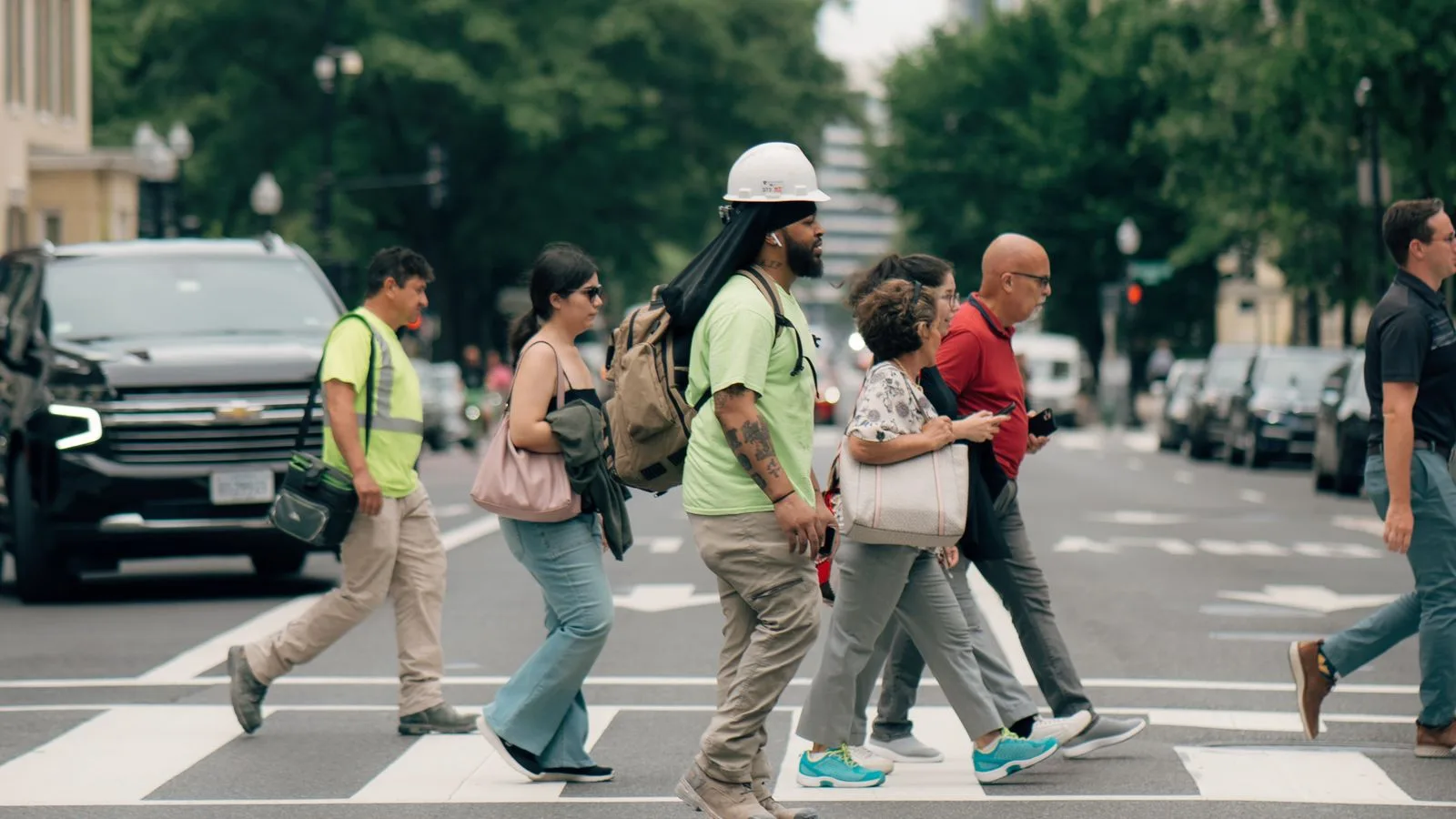
Odessa · Pedestrian Accident
Odessa Pedestrian Accident Lawyer
A pedestrian or bicycle accident claim in Odessa arises when a motor vehicle strikes a person on foot or on a bike on roads such as Andrews Highway, Grandview Avenue, or the intersection corridors around Loop 338. Texas Transportation Code § 552 requires drivers to yield in crosswalks, and § 551.101 grants cyclists the rights and duties of a motor vehicle operator. Liability is fault-based under Texas modified comparative fault, with the 51% bar of Chapter 33 applied in Ector County district court. The two-year statute under Tex. Civ. Prac. & Rem. Code § 16.003 governs the filing deadline. Because pedestrians and cyclists have no protective structure, moderate-speed collisions on Odessa's wide freight-oriented arterials regularly produce traumatic brain injury, pelvic fractures, and multi-system trauma routed through Medical Center Hospital.
Why Odessa cases are different
Odessa is built for trucks, not for people on foot, and that mismatch produces severe pedestrian and bicycle injuries. Where Loop 338 meets University, 42nd, and the Andrews Highway, a person crossing on a green has little protection from a driver who looks at traffic but never at the crosswalk.
Right-of-way, crosswalks, and driver inattention
Texas law gives pedestrians the right of way in marked crosswalks and at intersections, and drivers owe a duty to keep a proper lookout, yet the busy merge points around Loop 338 and the wide arterials like the Andrews Highway and SH-385 are engineered for vehicle throughput, not pedestrian safety. The typical serious Odessa pedestrian crash involves a driver turning across a crosswalk, failing to yield while merging, or simply not seeing a person in low light. Fault still runs through Chapter 33 proportionate responsibility, and insurers routinely argue the pedestrian darted out, crossed mid-block, or wore dark clothing. We push back with signal-timing data, the driver's sightlines, scene measurements, and any available traffic or business surveillance footage, because the physical facts usually tell a different story than the adjuster's first theory.
Catastrophic harm from an unprotected impact
A person on foot or a bicycle absorbs the full force of a vehicle with nothing between them and the impact, so even a moderate-speed collision can cause traumatic brain injury, spinal damage, or multiple fractures. Serious pedestrian and cyclist arrivals go to Medical Center Hospital, the Odessa Level III trauma center, with the most critical air-ambulanced to University Medical Center in Lubbock. Those transports generate substantial bills — a single air-ambulance flight in West Texas routinely runs into the tens of thousands — and the lien rights attached to them have to be analyzed before any settlement closes. We build the full medical chronology across every facility, fold the transport costs into documented medical specials, and negotiate the liens down at closure so the net recovery to the injured person is protected.




Frequently asked
Odessa pedestrian accident questions
- No. That is the standard defense, and it is exactly what Chapter 33 fault apportionment is meant to sort out. We test the claim against signal timing, the driver's sightlines, scene measurements, and any surveillance footage. Even if you share some fault, you can still recover as long as you are not more than 50% responsible, with your award reduced by your share.
- Texas law generally gives pedestrians the right of way in marked crosswalks and at intersections, and drivers must yield and keep a proper lookout. The wide, truck-oriented arterials around Loop 338 and the Andrews Highway are not designed with foot traffic in mind, but that does not relieve a driver of the duty to see and yield to a person legally crossing.
- Air-ambulance transport from Odessa to Lubbock routinely bills in the tens of thousands and becomes a major piece of the medical specials. We document it in full and fold it into the demand, then analyze the air-ambulance provider's lien and federal balance-billing protections, negotiating the lien down at settlement so more of the recovery reaches you.
- Yes. Under Tex. Transp. Code § 551.101, a bicyclist operating on a public road has the same rights as a motor vehicle operator and is owed the same duties from other drivers. The absence of a dedicated bike lane does not strip those rights. Where a driver unsafely passes or fails to keep a lookout for a cyclist on Andrews Highway or Grandview Avenue, the Chapter 33 liability analysis applies just as it would for any vehicle collision.
- Texas law recognizes a heightened duty toward child pedestrians, and very young children cannot legally be assigned comparative fault. The statute of limitations for a child's claim does not run until two years after their eighteenth birthday, preserving the claim through their full recovery. If the crash occurred near a school zone or residential area with known child-pedestrian activity, the driver's failure to take additional precautions strengthens the negligence analysis.
- Immediately. Business and traffic surveillance cameras in Odessa typically retain footage for 30 to 72 hours before overwriting. Signal-timing data from the city is available but requires prompt request. We send preservation demands to the relevant store, business, or city entity within 24 to 48 hours of being retained, because footage proving a driver ran a signal or failed to yield disappears quickly.
Where we work from
Downtown Austin. Odessa clients welcome.
Our office is in downtown Austin; we represent Odessa-area clients statewide and travel to Odessa for case-specific needs (scene visits, medical-records consultations, court appearances). Home and hospital visits when injuries make travel difficult.
Talk to a Odessa pedestrian accident lawyer.
Free case review, no obligation. We'll tell you straight whether we can help.