
Laredo · Truck Accident
Laredo Truck Accident Lawyer
Commercial truck crashes in Texas are governed by a layered set of rules that don't apply to ordinary car wrecks: the Federal Motor Carrier Safety Regulations (49 C.F.R. Parts 350-399), Texas Department of Public Safety enforcement under Tex. Transp. Code Ch. 644, and state common-law doctrines of respondeat superior and negligent entrustment that pull the motor carrier into the case alongside the driver. The two-year limitations period in Tex. Civ. Prac. & Rem. Code § 16.003 still controls, but the evidence window is shorter, because hours-of-service logs, electronic control module (ECM) downloads, and driver qualification files start cycling out under the carrier's own retention schedules within months.
Why Laredo cases are different
Laredo truck accident claims turn on Laredo-area roads, courts, and insurers, not generic statewide averages. Here is what shapes a truck accident case in and around Laredo, and how Cap City handles it.
Freight geography is the whole story in Laredo. Northbound trucks clear the World Trade Bridge, then feed onto FM 1472 — Mines Road — the industrial artery lined with warehouses, customs brokers, and transfer yards that connects the crossing to Loop 20 and the I-35 on-ramps. Mines Road carries loaded tractor-trailers, empty bobtails circling back for the next load, and passenger cars belonging to the people who work in those warehouses, all in the same lanes. The result is a collision pattern that does not exist in most Texas cities: heavy-vehicle crashes on an arterial rather than on an interstate, at arterial speeds, with turning movements into and out of yard driveways. Loop 20 (the Bob Bullock Loop) is the eastern bypass and takes the overflow, concentrating merge and rear-end collisions at the I-35 and US-59 interchanges. US-59 runs east toward Freer and George West; US-83 runs the river line north toward Zapata and south into the older neighborhoods. Downtown, Gateway to the Americas and the Juárez-Lincoln bridges drop passenger and pedestrian traffic onto the surface grid around Convent Avenue and San Bernardo, where pedestrian-strike files cluster. Where a crash happened in Laredo tells you almost everything about who the defendant is going to be.
Serious-injury filings out of Laredo go to the Webb County district courts at the courthouse on Victoria Street: the 49th, 111th, 341st, and 406th, assigned by docket draw. Venue under Tex. Civ. Prac. & Rem. Code § 15.002 is proper where the events occurred or where the defendant resides, and for a crash inside Webb County that defaults to Webb County. The complication in this market is federal removal, and it is not a remote possibility; it is the base case for the freight files. The U.S. District Court for the Southern District of Texas, Laredo Division, sits here, and a defendant carrier headquartered in another state (or another country) with more than $75,000 in controversy has both the incentive and the standing to remove. Southern District scheduling, its local rules, and its expert-designation deadlines produce a materially different case timeline than a Webb County state docket. We run the removal analysis before the petition is drafted rather than after, because the answer changes how the pleading is built and which defendants are named first.




How we approach truck accident cases
Why truck cases are not just bigger car cases
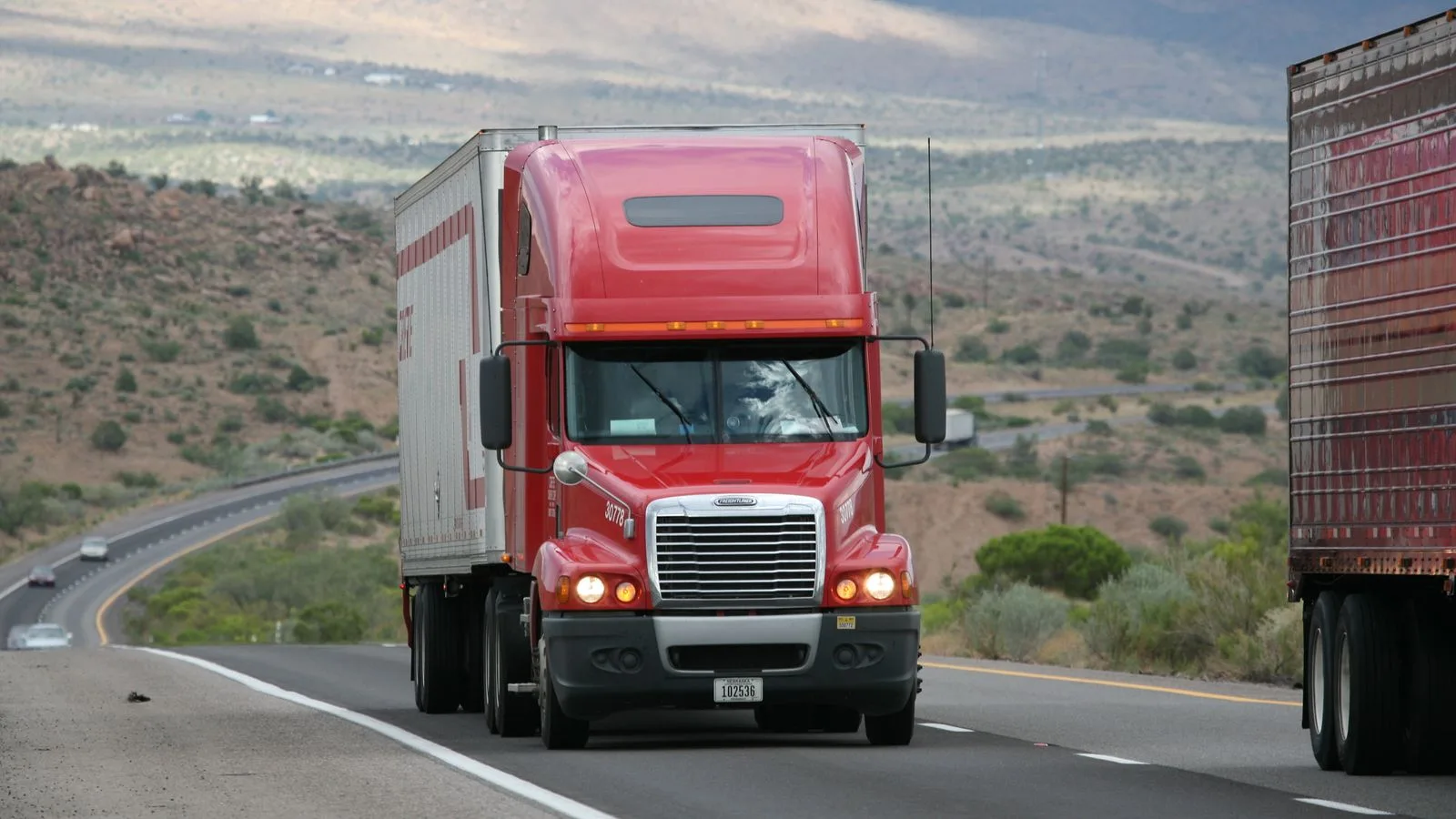
An 80,000-pound tractor-trailer crash on I-35 or I-10 is a different legal animal from a passenger collision. The driver was working, meaning the motor carrier is on the hook under respondeat superior, and often directly liable for negligent hiring, training, supervision, and retention. The carrier carries minimum federal coverage of $750,000 (hazmat and passenger carriers higher), and most actual policies run well into the millions. The defense gets sophisticated fast: rapid-response investigators reach the scene within hours, accident-reconstruction experts get retained before the injured person leaves the hospital, and spoliation of the driver's logs becomes a live issue inside two weeks.
FMCSA rules that drive liability in Texas truck cases
Hours-of-service limits (49 C.F.R. Part 395) cap a property-carrying driver at 11 hours of driving in a 14-hour window after 10 consecutive hours off duty. Electronic logging device (ELD) records, fuel receipts, toll transponder data, and Qualcomm or PeopleNet telematics together create a paper trail that either confirms or contradicts the driver's log. Pre-trip inspection failures under Part 396, drug-and-alcohol testing violations under Part 382, and driver-qualification gaps under Part 391 are the regulatory hooks that turn an ordinary negligence case into a punitive-damages case under Texas Civil Practice & Remedies Code § 41.003.
Frequently asked
Laredo truck accident questions
- Three big reasons. First, the defendant is usually a company with substantially higher insurance limits than an individual driver; federal minimum is $750,000 for general freight and runs much higher for hazmat. Second, the driver was working, which brings respondeat superior and direct corporate negligence claims (hiring, training, supervision) into play. Third, the evidence is regulated: ELD logs, ECM downloads, drug-and-alcohol testing records, and qualification files exist by federal mandate, but they have to be preserved fast before the carrier's retention schedules cycle them out.
- Faster than after a passenger-vehicle crash. The two-year statute under Tex. Civ. Prac. & Rem. Code § 16.003 still governs the lawsuit deadline, but the critical evidence has a much shorter shelf life. ELD data and Qualcomm telematics roll off within months. The tractor itself goes back into service within days, and any ECM data not preserved by spoliation letter is at risk. The carrier's rapid-response investigators are already working the scene while the injured driver is in the ER. Calling counsel within the first week is functionally non-negotiable for a serious case.
- Both, in almost every meaningful case. Under Texas respondeat superior doctrine, an employer is liable for an employee's negligence committed within the course and scope of employment, which a long-haul trucker driving a load almost always is. Beyond that, direct corporate claims for negligent hiring, training, supervision, retention, and entrustment let you reach evidence about the carrier's safety practices that is often the most damaging part of the file. Federal motor-carrier insurance is required to be primary, so the carrier's policy answers first.
- The federal hours-of-service rule (49 C.F.R. Part 395) caps a property-carrying truck driver at 11 hours of driving within a 14-hour on-duty window, following 10 consecutive hours off duty, with a 60/70-hour weekly limit. Violations are a leading cause of fatigue-related crashes. Because every commercial motor vehicle in interstate commerce is required to log hours electronically via ELD, an hours-of-service violation typically shows on the data, and when it does, it shifts the case from a credibility fight to a documented federal-rule violation, with corresponding implications for punitive damages.
- In the Webb County district courts at the courthouse in Laredo — the 49th, 111th, 341st, or 406th, assigned by docket draw — for any crash arising inside Webb County. The one that matters more in this market is the follow-up question: whether the case stays there. Freight cases with an out-of-state or foreign carrier and more than $75,000 in controversy are strong candidates for removal to the U.S. District Court for the Southern District of Texas, Laredo Division. We evaluate removal exposure before drafting the petition, because a federal timeline changes the case plan.
- Usually yes, but the analysis is different and it starts earlier. The first job is identifying every motor carrier in the chain: the drayage operator that moved the trailer across, the freight broker that placed the load, the trailer's owner or lessor, and the carrier of record on the Mexican side. Each has its own insurance. A policy written for a Mexican-domiciled carrier may exclude US losses or carry limits far below what an American claim is worth, which is exactly why the other parties in the chain matter so much. We do not accept a police report's identification of the responsible party as the end of the inquiry.
Where we work from
Downtown Austin. Laredo clients welcome.
Our office is in downtown Austin; we represent Laredo-area clients statewide and travel to Laredo for case-specific needs (scene visits, medical-records consultations, court appearances). Home and hospital visits when injuries make travel difficult.
Talk to a Laredo truck accident lawyer.
Free case review, no obligation. We'll tell you straight whether we can help.